Let's start with the honest part
Here's the thing: your partner saying yes to bringing a lemon vibrator into your sex life is already a good sign. It means they're curious, they're thinking about your pleasure, and they're willing to try something unfamiliar. But curiosity without confidence can feel awkward fast. If they're hesitant, it's usually not because they don't want to. It's because they're unsure of their role, worried they'll mess it up, or concerned they're being replaced.
None of those are true. And we can fix the discomfort in about three conversations and one intentional first time.
Why partners hesitate (and what it actually means)
Most partner hesitation about adding a lemon clitoral vibrator falls into three buckets.
First: performance anxiety. Your partner might worry that introducing a toy means they're not enough. This one's loud in their head but rarely spoken aloud. Second: mechanical uncertainty. They don't know where to hold it, how long to use it, what intensity to start with. Third: the unspoken fear that once you experience a lemon vibrator, you'll prefer it to them.
Listen, the last one is worth saying directly: a lemon vibrator isn't a replacement. It's a tool. A chef doesn't stop using a knife because they own a blender. Your partner using a lemon vibrator with you means more pleasure, more variety, and more ways to connect. That benefits them too.
The conversation before the toy arrives
Don't just surprise them with a lemon vibrator. That's chaos. Instead, frame it as an experiment you're running together.
Start somewhere low-key. "I've been thinking about exploring more during sex, and I came across these clitoral vibrators that seem really well-designed. Would you be open to trying one together?" Notice: not "I want to buy a vibrator because you're not giving me enough pleasure." That's different energy entirely.
If they say yes but with hesitation, ask them directly: "What concerns do you have?" Then listen. If it's performance worry, say: "I want this because I want more sensation. It has nothing to do with you being inadequate." If it's mechanical worry, say: "We'll figure it out together. No pressure." If it's the replacement fear, say: "This is about us, not about me preferring something else."
The setup: removing friction before it starts
When the lemon vibrator arrives, don't jump straight into sex.
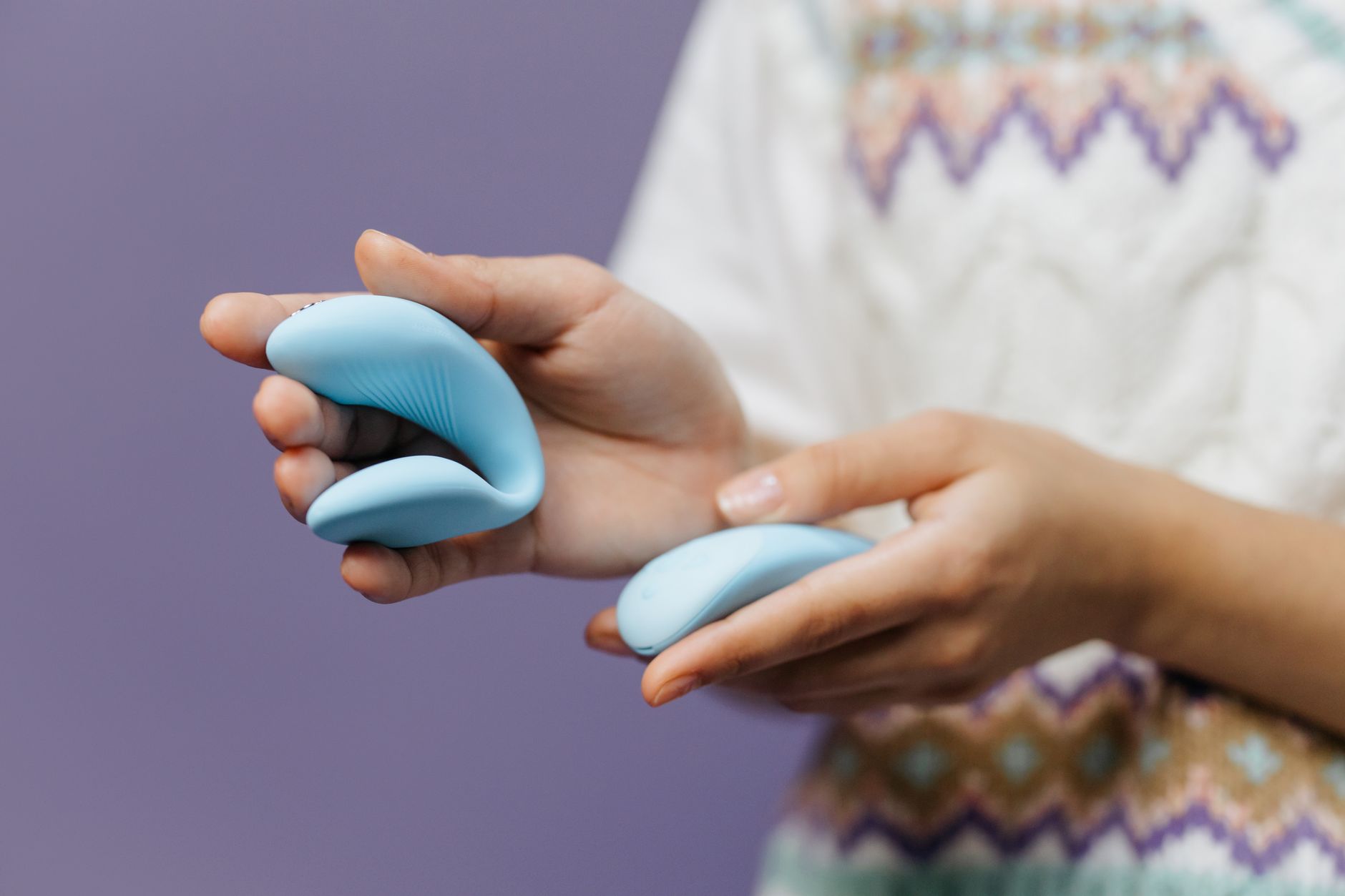
Instead, open it together. Let them hold it. Let them feel the weight, see the design, understand the button layout. If they understand the device first, the sex part feels less foreign. Charge it fully together and do a test run in your hand. "Okay, so pattern one is this gentle pulse. Pattern two is this stutter. Pattern three is faster." Now they've got context.
Then set expectations for the first time. "I'm thinking we start slow. You can hold it while we kiss. If it feels good, we keep going. If it doesn't, we try something else. There's no quota here." That removes the pressure of "this has to work perfectly."
The first time: their role, exactly
Here's what I tell couples: your partner doesn't need to be a lemon vibrator expert. They need to be present and responsive to you.
Start with foreplay. Kiss, touch, build arousal the way you normally do. When you're ready, guide their hand. "Here, hold it like this." Let them apply it while you tell them what feels good in real time. "A little lighter." "Stay there." "Try this pattern." They're not operating the toy in isolation. They're cooperating with your body.
The best part: when your partner sees your response, hesitation usually vanishes. They're watching you feel good. They're making it happen. That's not threatening. That's intimate.
Building the collaborative rhythm
Once you've done it once, the second time gets easier. Your partner knows the toy exists. They've seen it work. Now you can actually collaborate.
Try this: they control the lemon vibrator while you control the pace and angles of penetration (if that's part of your sex life). Or they hold it while you move. Or you alternate who's directing. The point is that the toy becomes another variable you're playing with together, not a separate thing one of you operates.
Over time, couples often find their own rhythm. Some partners love holding the lemon vibrator during sex because it deepens their sense of participation. Some love watching you use it on yourself while they're involved in other ways. Some use it during foreplay and then set it aside. There's no one way to do this right.
When hesitation persists (the real conversation)
If your partner remains uncomfortable even after one or two tries, that's worth exploring differently.
Sometimes hesitation isn't about the toy. It's about deeper feelings about sex, desire, control, or how they see themselves in your intimate life. That's not something a lemon vibrator can fix. That's something a conversation with a couples' therapist or sex-positive counselor can help with. And that's completely normal. Not every couple jumps into sex toys at the same pace, and forcing it creates resentment.
If that's where you are, pause the toy experiment. Have the bigger conversation. "I want you to feel comfortable and excited about this, not pressured." That honesty usually shifts the dynamic significantly.
The long view: pleasure compounds
Here's what I've seen in my practice: couples who successfully integrate a lemon clitoral vibrator often report feeling closer after, not more distant. Why? Because they had to communicate clearly. They had to pay attention to each other's hesitation and needs. They had to collaborate on something unfamiliar together.
That's exactly what lasting relationships need. More communication. More presence. More willingness to explore together.
Your partner's hesitation isn't a bad sign. It's an opening. And approaching it with patience and honesty usually leads to pleasure that benefits both of you.
Frequently asked questions
How do I know if my partner is truly open to using a lemon vibrator or just agreeing to make me happy?
Ask directly. "I want you to genuinely want this, not just do it for me. Are you actually curious, or are you uncomfortable?" People who are just placating usually soften the boundary when given permission to say no. People who are genuinely curious will usually clarify that. Their body language and tone shift.
Should my partner use the lemon vibrator on me, or should I use it on myself during sex?
Both. Try different approaches. Some couples enjoy the intimacy of a partner holding the vibrator. Some enjoy the control and sensation of using it themselves while their partner is involved in other ways. Some do both on different occasions. There's no rule here.
What if my partner wants to use a lemon vibrator on themselves too?
That's wonderful. Some partners get curious and want their own experience. A lemon clitoral vibrator can be used across different anatomy, and if your partner is interested in exploring their own pleasure with it, that's genuinely healthy. It shifts the dynamic from "your toy" to "our shared tool."
How long should we use a lemon vibrator during sex?
As long as it feels good. Some couples use it for five minutes. Some use it for fifteen. Some use it intermittently. You'll figure out what works for your bodies and your rhythm. There's no timer.
What if the lemon vibrator kills the mood or makes things feel mechanical?
That happens sometimes, especially the first few tries. It doesn't mean you should quit. It usually means you need to slow down and get back to the basics. Foreplay, kissing, touch, and then introduce the vibrator when arousal is genuinely high. Sometimes mechanical feelings ease when the tool becomes less novel.
Should we talk about what we like or didn't like afterward?
Yes. Brief, direct, kind. "That felt really good when you held it there." "I liked the patterns but want to try lower intensity next time." These small debrief conversations make the next experience significantly better. They also build intimacy because you're saying directly what works for your body.
Your turn
Introducing a lemon vibrator into shared intimacy doesn't have to be complicated. It's just communication, curiosity, and the willingness to explore pleasure together. If your partner's hesitation is what brought you here, you're already halfway there. You're thinking about their comfort. Now have the conversation, set expectations, and let the experience unfold. Most couples find that the collaboration itself is the best part.