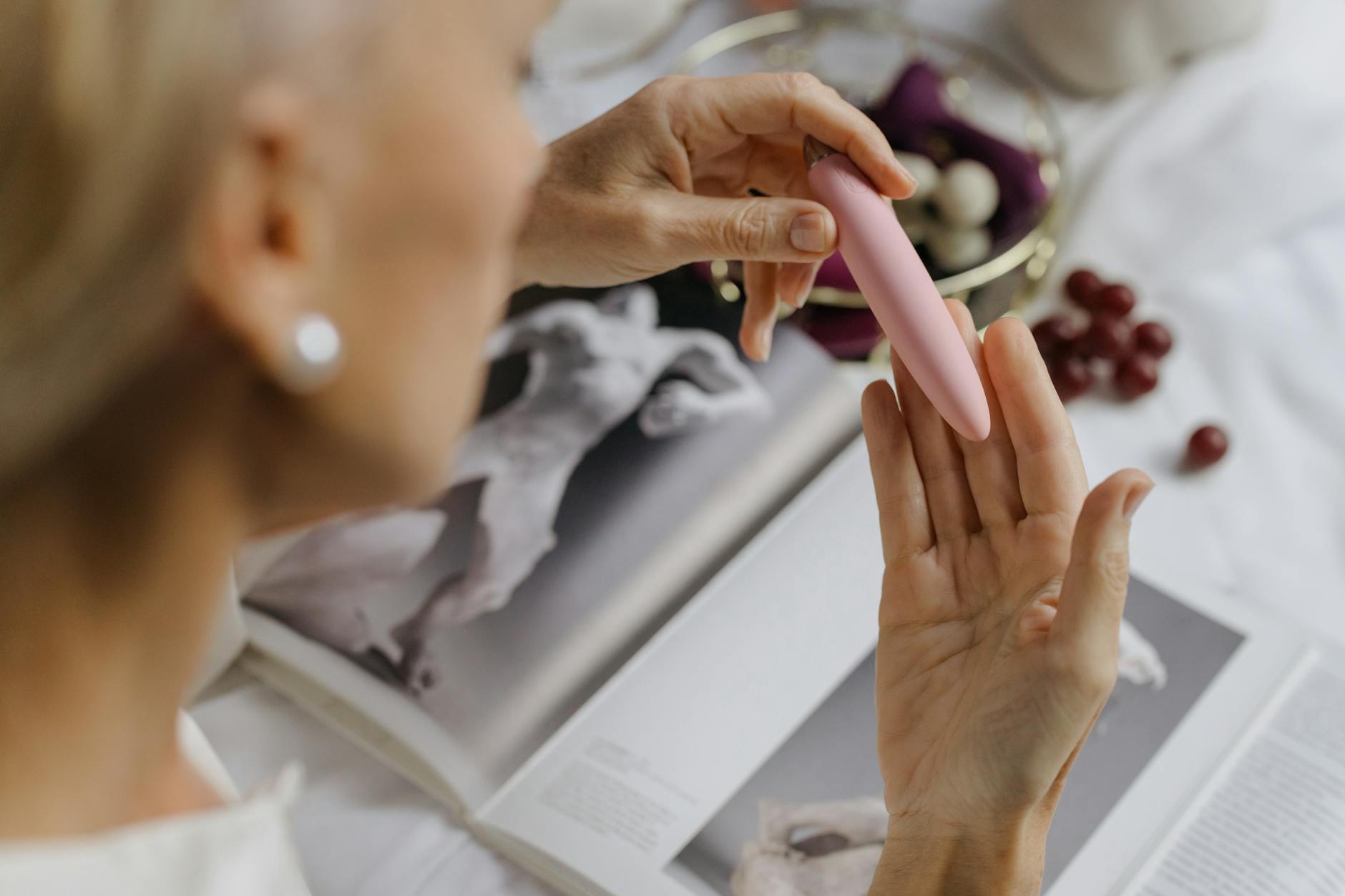
How to Use a Lemon Vibrator When You Want More Control During Solo Pleasure
Honestly? Most of us have spent our lives letting pleasure happen to us. Whether that's because we're conditioned to prioritize someone else's experience, or because we've never been taught that pleasure is something you actively direct, the result is the same. You're along for the ride instead of driving it.
Solo pleasure is where that changes. And the right tool makes all the difference.
Why control matters more than you think
Here's what I've learned from years of working with people on intimacy and desire. The biggest obstacle to satisfying orgasms isn't physical. It's psychological. When you feel like you're rushing toward a finish line, your nervous system doesn't relax into pleasure. It stays braced, waiting for the next thing.
Control flips that script. When you're the one deciding the pace, the intensity, the pattern, and when to speed up or slow down, something shifts neurologically. Your body stops bracing and starts opening. That's not woo. That's how arousal actually works.
A lemon vibrator—specifically, one designed with suction and pattern control—gives you that control in a way that vibration-only toys often don't. You're not just turning it on and hoping for the best. You're actively choosing.
The anatomy of control: what patterns actually do
When you're using a lemon clitoral vibrator solo, you have two variables you're adjusting. Intensity (how strong the sensation is) and pattern (the rhythm or sequence of that sensation). Most people think intensity is what gets them there. It's not. Pattern is.
Your clitoris has thousands of nerve endings, but they're not all wired the same way. Some respond to steady pressure, some to rhythmic pulses, some to waves or complex sequences. When you're solo and you have full control, you can actually experiment with what your body responds to on any given day. Some days, pattern 3 on a lemon sucker does it. Other days, you need pattern 6 with lower intensity.
That's not indecision. That's intelligence. You're teaching yourself what your own pleasure map looks like.
Setting yourself up for success
Control starts before you even turn the device on. Here's what I recommend to clients who are rebuilding a relationship with solo pleasure or learning to prioritize their own orgasm.
First: create actual space. Not metaphorical space. Physical space. Lock the door. Put your phone in another room. Tell whoever you live with that you're unavailable for 30 minutes. Solo pleasure isn't selfish, but the anxiety of potentially being interrupted will absolutely wreck your nervous system's ability to relax. Remove that variable.
Second: take time with foreplay. Most people—and I say this clinically, not judgmentally—spend about 2 minutes warming up before they turn on a lemon vibrator. Then they wonder why their body isn't responding. Your clitoris needs blood flow. It needs to swell. It needs time. Budget 10-15 minutes of manual touch, exploring, maybe some fantasy or audio content, whatever gets your body actually interested. Then you bring in the tool.
Third: start lower than you think. This is where control gets interesting. The temptation with a new lemon clitoral vibrator is to jump straight to the intensity level that gives you that immediate "oh wow" feeling. Don't. Start at pattern 1 or 2, lowest intensity. Let your body acclimate. This isn't about being gentle or timid. It's about understanding your baseline response on this particular day.
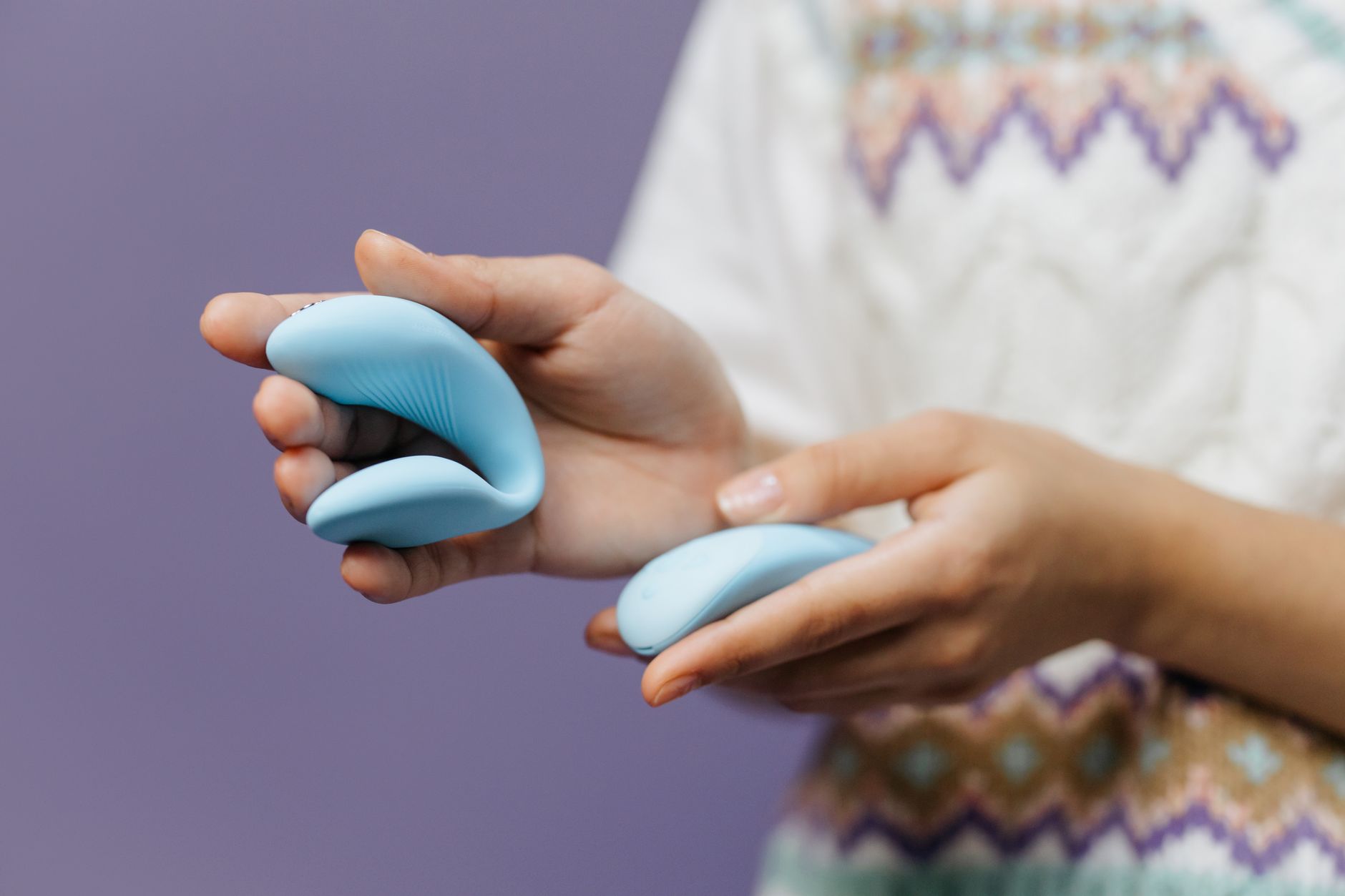
Photo by cottonbro studio on Pexels
The protocol: building intensity with intention
This is where solo pleasure becomes genuinely powerful. Once you're aroused and you've got your lemon vibrator on a low setting, here's what happens next.
Spend 2-3 minutes at each intensity level before moving up. I know that sounds glacial. It's not. What's happening during those 2-3 minutes is your nervous system is learning this sensation, your tissues are responding, and your brain is getting more engaged. When you move up too quickly, you skip that integration. You get a jolt instead of a building wave.
As you move through intensity levels, notice what changes. Does one pattern feel flat and another more dynamic? Does your breath change? Does your pelvic floor engage differently? You're collecting data about your own body. This is the opposite of being out of control. This is absolute precision.
Some sessions, you'll build all the way to high intensity. Some sessions, you'll find your rhythm at medium intensity and stay there for 10 minutes, letting the sensation build in layers rather than in steps. Both are completely valid. Both are you being in control.
What to do when you hit a plateau
This happens to everyone: you're at a decent intensity, it feels good, but it's not building toward orgasm. Your instinct is usually to crank it up. Don't. Instead, pause for 30 seconds. Take your hands away. Breathe. Let your nervous system reset.
Then come back and try a different pattern at the same intensity. The novelty often restarts the building sensation. If that doesn't work, go back down one intensity level and stay there for a minute. This is not failure. This is you actively managing your arousal state instead of just pushing harder.
I also recommend pausing before you think you need to. If you're at 70% of the way to orgasm and you back off for 30 seconds, the next ramp-up often feels more intense. You're not losing progress. You're deepening the sensation.
The role of lubrication in your control
Dry tissue changes everything about how a lemon sucker feels and how much control you actually have. When there's friction, you can't move the device smoothly through intensity levels. You're fighting resistance.
Use water-based lubricant, generously. Not because something is wrong with you, but because lubrication is a variable you control. More lube = smoother transitions between patterns and intensities. Less lube = more friction and sometimes faster escalation. Experiment with both and notice what gives you the control rhythm you prefer.
Solo pleasure and your relationship with yourself
Here's what I tell couples when one person is rebuilding solo pleasure: this is not practice for partner sex. This is not a dress rehearsal. This is the main event.
When you're alone with a lemon vibrator and you've got full control over pace and intensity, you're learning something irreplaceable about yourself. You're learning what your body actually wants instead of what you think it should want. You're learning that your pleasure is worth the time and attention you're giving it. You're learning that you can be trusted with your own body.
All of that translates to better sex with partners, sure. But more importantly, it translates to a deeper relationship with yourself. And that's where real satisfaction lives.
Addressing common roadblocks
"I feel self-conscious using a vibrator, even alone." This is one of the most common things I hear. The antidote is separating pleasure from performance. You're not putting on a show. No one's watching. Your only job is to find out what feels good. If that requires a lemon clitoral vibrator, a specific pattern, 25 minutes of buildup, and complete silence, then that's what you use. Your pleasure doesn't need to be efficient or hot or interesting to anyone but you.
"I can't seem to orgasm, no matter how long I try." Control is not about forcing an outcome. Sometimes your body needs more time. Sometimes you're still carrying stress from your day. Sometimes you're not actually in the mood, and that's information worth noticing. If orgasm isn't happening after 20-25 minutes of intentional play, it's okay to stop. You've still experienced pleasure. You've still been in control. That counts.
"I keep rushing." This is the nervous system telling you something. Maybe you have limited privacy. Maybe you're anxious about being "found out." Maybe you're still carrying cultural messages that pleasure should be quick and quiet. These are real barriers, and they need addressing separately from your technique. But in the moment, set a timer. Give yourself permission to take 30 minutes. Remove the pressure of urgency.
When control means knowing what you don't want
One more thing: solo pleasure with a lemon vibrator isn't just about discovering what makes you come. It's about learning what you absolutely don't want. If pattern 4 makes you numb instead of aroused, you now know that. If high intensity feels overwhelming, you know that too. This information is gold when you're with a partner because you can actually articulate what works.
Control also means you can stop anytime. You don't have to reach orgasm. You don't have to use the highest setting. You don't have to perform anything for yourself. Your body, your pace, your terms.
The deeper benefit
Solo pleasure with a tool designed for your anatomy—like a lemon clitoral vibrator with pattern and intensity control—is where you reclaim agency. Not just sexually, though that too. But in your body, your time, your wants, and your right to prioritize yourself.
That's what control actually is. And it changes everything.
FAQ: Control and Solo Pleasure
How long should a solo pleasure session actually take?
There's no "should." But if you're building intentionally through intensity levels with pauses, 20-30 minutes is common. Some people find what they need in 10 minutes. Some take 45. The point is you're not racing. You're exploring. The time is part of the experience, not the enemy of it.
Should I use the same pattern every time?
Not necessarily. Your body responds differently depending on stress levels, hormones, time of day, and what else is happening in your life. Variety teaches you more about your own pleasure landscape. But if one pattern is your go-to, that's also fine. Consistency can be deeply satisfying.
What if I can't orgasm with a lemon vibrator?
Organisming isn't the only marker of good solo pleasure. Some days your nervous system just isn't in the right state, no matter the tool. Notice what happens instead. Does your body feel more relaxed? Is there pleasure even without orgasm? That information matters more than the outcome.
Can using a lemon sucker make it harder to orgasm with a partner?
No. This is a common myth. A lemon clitoral vibrator gives your body specific types of stimulation. Your body doesn't "forget" how to respond to partner touch. In fact, solo pleasure usually makes partner sex better because you know what you actually want and can ask for it.
Is it normal to need more intensity over time?
Yes and no. Sometimes your nervous system just adapts, and you genuinely need more sensation to get the same response. Other times, you're distracted or stressed, and you think you need more when you actually need less friction or more mental space. Pay attention to the difference. They require different solutions.
How do I know if I'm doing it "right"?
If you feel more connected to your own pleasure, more aware of your body's signals, and more in control of the experience, you're doing it right. "Right" isn't about efficiency or performance. It's about agency and self-knowledge.
Your pleasure is not a luxury. It's not something you earn after you've taken care of everyone else or checked off your to-do list. It's a legitimate part of your well-being, and you deserve the time, space, and tools to explore it fully.
If you're ready to explore solo pleasure more intentionally or have questions about what works best for your body, reach out. That's what we're here for.