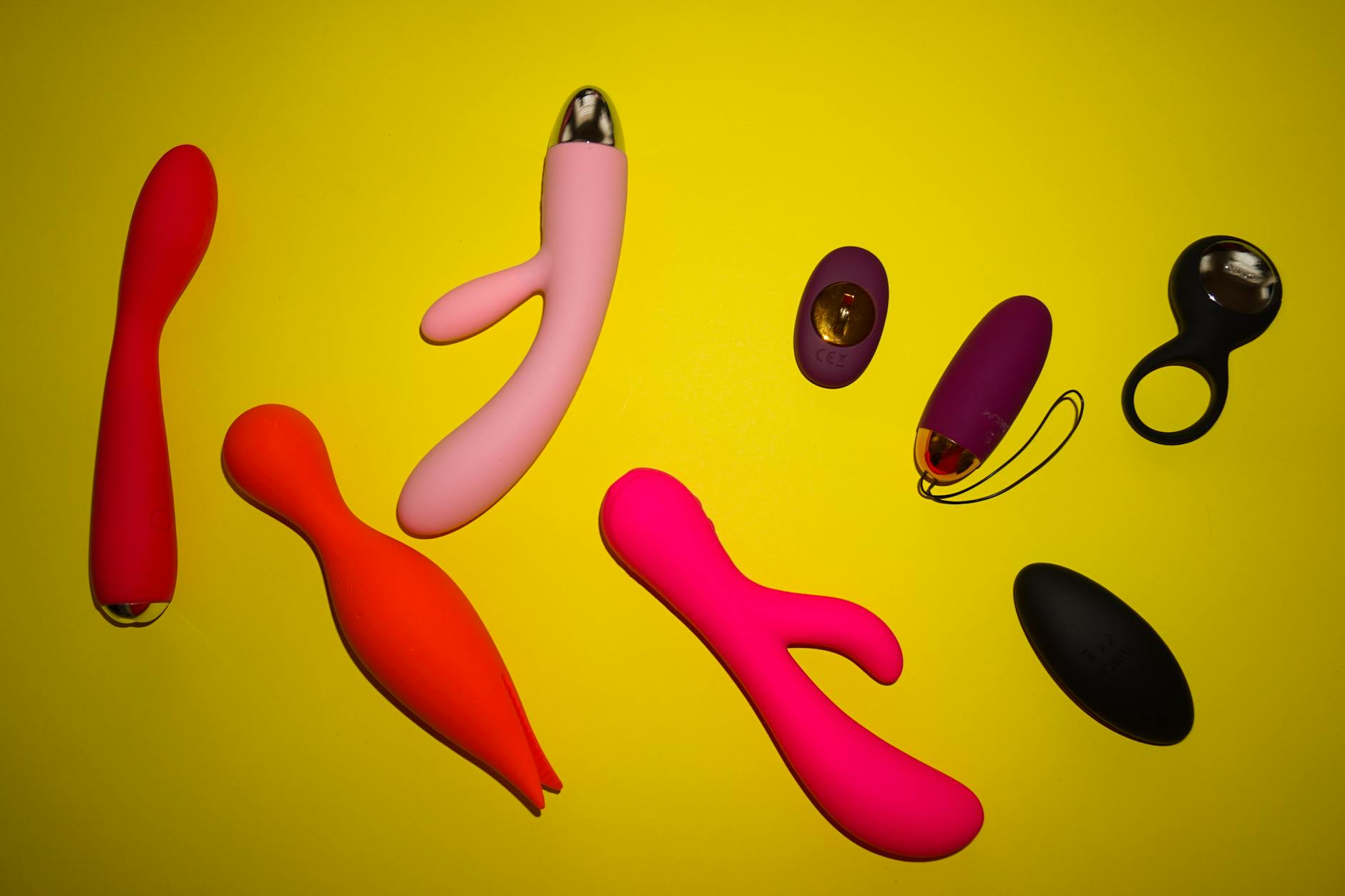
The tricky part no one talks about
Here's the thing: a lemon clitoral vibrator doesn't just add sensation to partnered sex. It rewires how you move together, where attention goes, and what "mutual" actually means. Most couples bring toys into bed expecting them to be a simple add-on. They're not. They're a conversation starter that forces you both to get honest about what you actually want.
I've worked with dozens of couples who thought buying a lemon vibrator would fix a flagging sex life or add spice to a good one. Sometimes it does. Often, what really happens is you discover you've been having the same sex for years and never noticed.
Why the lemon vibrator changes the dynamic
Unlike penetrative sex, which has a built-in rhythm and endpoint, a lemon clitoral vibrator demands intentionality. You can't coast. One partner can't just show up and expect the other to drive. The toy sits there—present, humming, impossible to ignore—and suddenly you're both hyperaware that clitoral pleasure has its own timeline.
That's the gift and the friction. It forces conversation. "Does this feel good? Do you like the angle? Should I slow down?" These questions feel vulnerable because you've probably been having sex without asking them.
The other shift: a lemon sucker or clitoral vibrator doesn't require any genital contact from a partner. This is radical. For the first time, one partner can experience intense pleasure while the other isn't actively doing anything to their own genitals. This breaks the symmetry couples are trained to expect. It's not bad. It's just different, and different feels weird at first.
The setup that actually works
Let's get practical. If you're introducing a lemon clitoral vibrator to partnered sex, positioning matters more than you'd think.
Position one: You on your back, partner between your legs. This is the most intuitive. Your partner has full visual access, can control the toy, and can still touch you elsewhere. They can watch your face, adjust pressure, switch patterns. The vulnerability here is real—they're watching you come—but most couples find this is where connection deepens fastest.
Position two: Spooning, toy in front. You're on your side, back against your partner's chest. They hold the lemon vibrator while their other hand or body stays close. This is slower, more intimate, less goal-oriented. Time stretches. Good for when you want to focus on the sensation rather than performance.
Position three: You in control, they alongside. You hold the toy, your partner is beside you or inside you. This one keeps power in your hands—literally. You control the pressure, the angle, the timing. Your partner's role shifts from operator to participant, which some couples love and some find disorienting.
The position you pick matters less than the fact that you pick it together and can adjust it if it's not working.
The rhythm problem
Most partnered sex has a recognizable rhythm. Someone leads. Someone follows. There's a buildup, a peak, a landing. A lemon vibrator disrupts this in ways that require actual communication.
If your partner is inside you while you use the vibrator, you're adding sensation to both partners simultaneously—but not equally. Your nervous system is getting direct clitoral stimulation. Theirs is getting indirect stimulation through your body's response. These aren't comparable experiences. You might be close to orgasm while they're still warming up, or vice versa. The mismatch is normal and okay. It's also something most couples never talk about because penetrative sex gives the illusion that you're on the same timeline.
With a lemon vibrator in the room, you can't pretend anymore. You have to decide: do we take turns? Do we prioritize one person's pleasure first? Do we try to finish together and accept that might not work? These aren't failures of communication. They're conversations that actually matter.
How to introduce it without awkwardness
The worst way to bring a lemon clitoral vibrator to bed is to surprise your partner with it mid-sex. The second worst way is to frame it as a fix for something missing. Both approaches scream "there's a problem here."
Instead: bring it up when you're not in bed. "I've been curious about using a toy together. Would you be interested in trying?" Notice the question mark. Notice that you're asking about both of you, not framing it as something you need.
If your partner hesitates, don't push. But do ask why. Are they worried it means they're not enough? Are they uncomfortable with toys in general? Are they concerned about where it fits physically? These are different problems with different solutions. Someone worried about inadequacy needs reassurance about desire and connection. Someone who thinks toys are weird might just need to hold one, see that it's not a threat, understand it's an addition rather than a replacement.
When you do use it together for the first time, go slow. Start clothed if that feels safer. Let your partner watch you use it solo while they're beside you. This removes the performance pressure of both of you being stimulated at once. Then graduate to partnered exploration when it feels natural.
Communication during, not just before
Here's what I tell couples: every single time you use a lemon vibrator together, at least one person should say something during. "That angle works better." "Can you go slower?" "I like when you do both at the same time." Not as questions. As statements. As instruction.
This rewires the nervous system. Most people learn to receive sex passively—to accept what's happening and respond. A toy demands active participation. It demands you know what you want and can articulate it. That's uncomfortable. Do it anyway.
The partner holding the vibrator should also narrate: "I'm going to change the pattern now." "Does this speed feel good?" "Tell me when to stop." This isn't just politeness. It's presence. It's saying "I'm paying attention to your body and your pleasure, not just moving forward on autopilot."
The orgasm question
Something I see in couples is the assumption that a lemon vibrator is an orgasm delivery device. Use it, finish, done. That's one way to use it. But it's not the only way.
You can use a clitoral vibrator for sensation without orgasm as the goal. You can use it to warm up before partnered sex. You can use it to extend an orgasm or cycle through multiple peaks. You can use it while your partner is inside you and you're both focused on a different kind of sensation entirely.
The couples I work with who report the most satisfying sex are the ones who untether the toy from orgasm. They use it because it feels good, not because it's supposed to deliver results. When you release the achievement angle, everything loosens. Including, weirdly, your ability to actually come.
When it's not working
If you've tried a lemon vibrator together and it feels awkward, that's data, not failure. Some couples are better suited to partnered sex without toys. Some couples need way more conversation before introducing one. Some couples discover they want different things—one person wants to use it frequently, the other doesn't—and need to negotiate what that looks like.
The toy isn't the relationship. It's just a tool. If the tool creates friction you can't resolve, put it down. But pay attention to why. Is it genuinely not your style? Or are you uncomfortable with the conversation it forced you to have?
Often the resistance isn't about the toy. It's about the vulnerability of asking for what you want, or witnessing your partner ask for what they want, in explicit detail.
Making space for different preferences
One partner might love the intensity of a lemon clitoral vibrator. The other might find it overstimulating. One might want to use it every time you have sex. The other might want it once a month. One might want to incorporate it into everything. The other might want to keep partnered sex toy-free.
None of these are wrong. But they do require negotiation. This is where how to feel comfortable asking for what you want becomes essential. You can't use a vibrator together if one person resents its presence.
The bigger thing
A lemon vibrator in partnered sex forces you to have the conversation you've probably been avoiding. What do we both want? What feels good to me? What am I willing to ask for? What am I willing to hear?
These conversations are uncomfortable. They're also the difference between sex that feels obligatory and sex that feels like an actual connection. The toy is just the messenger.
If you're considering introducing a lemon clitoral vibrator to partnered sex, go in knowing: this is going to shift something. It might shift it toward deeper intimacy and pleasure. Or it might reveal that you've been having sex under assumptions that need reworking. Both outcomes are useful. Both are worth the awkwardness.
People also ask
Can I use a lemon vibrator during penetration?
Yes. Many couples use a clitoral vibrator while penetrative sex is happening—either you holding it, your partner holding it, or both of you together. The sensation for the receiving partner intensifies. The giver feels the vibration through the walls of the vagina. It's different every time because positioning and angle change everything. Experiment with what feels good to both of you.
What if my partner is uncomfortable with toys?
Discomfort usually comes from one of three places: they think the toy means they're not enough, they're uncomfortable with sex toys in general, or they worry about how it will feel or fit. Start by asking which one it is. If it's inadequacy, reassurance and connection help. If it's general discomfort with toys, let them explore solo or watch you use one before anything partnered. If it's a physical concern, use lots of lube and start with lower speeds. Most discomfort fades once the toy is actually inside the experience rather than abstract.
Should we use vibration or suction for partnered sex?
This depends entirely on what feels good to the receiving partner. Some people prefer the broad stimulation of suction during partnered sex because it feels less intense and allows for more connection to the partner. Others find vibration works better because it doesn't create as much sensation shift between toy and partner touch. Try both. Your body will tell you.
How do I know if the toy is enhancing our sex or replacing intimacy?
Look at your communication. If you're using the toy and talking, checking in, adjusting, staying present with each other—it's enhancing things. If you're using the toy in silence while one person checks out—that's a sign something's off. The toy isn't the issue. The disconnection is. How you're using it with a partner matters far more than the toy itself.
Can we both orgasm at the same time with a lemon vibrator?
Maybe. It depends on your nervous systems, your bodies, your connection, and honestly, luck. Some couples find that partnered clitoral stimulation with a toy syncs their timing. Others find it impossible because one person needs way more time or intensity than the other. The couples I work with who report the most satisfaction are the ones who stop trying to finish together and just focus on finishing well. If simultaneous orgasms happen, great. If not, you're still having sex.
How often should we use a lemon vibrator together?
As often as feels good to both of you. Some couples use one every single time they have partnered sex. Others use one occasionally, as a change of pace. Some use one during solo play and keep partnered sex toy-free. There's no correct frequency. The only rule is that both partners want it to happen. If one person is using the vibrator and the other is tolerating it, that's a sign you need to talk about what's actually working.
Final thought
Using a lemon vibrator for partner sex isn't about adding more sensation. It's about creating the conditions for honesty. You can't use a toy together and avoid knowing what your partner wants. You can't watch someone use a clitoral vibrator and pretend you don't care about their pleasure. The toy forces presence. That's its real magic.