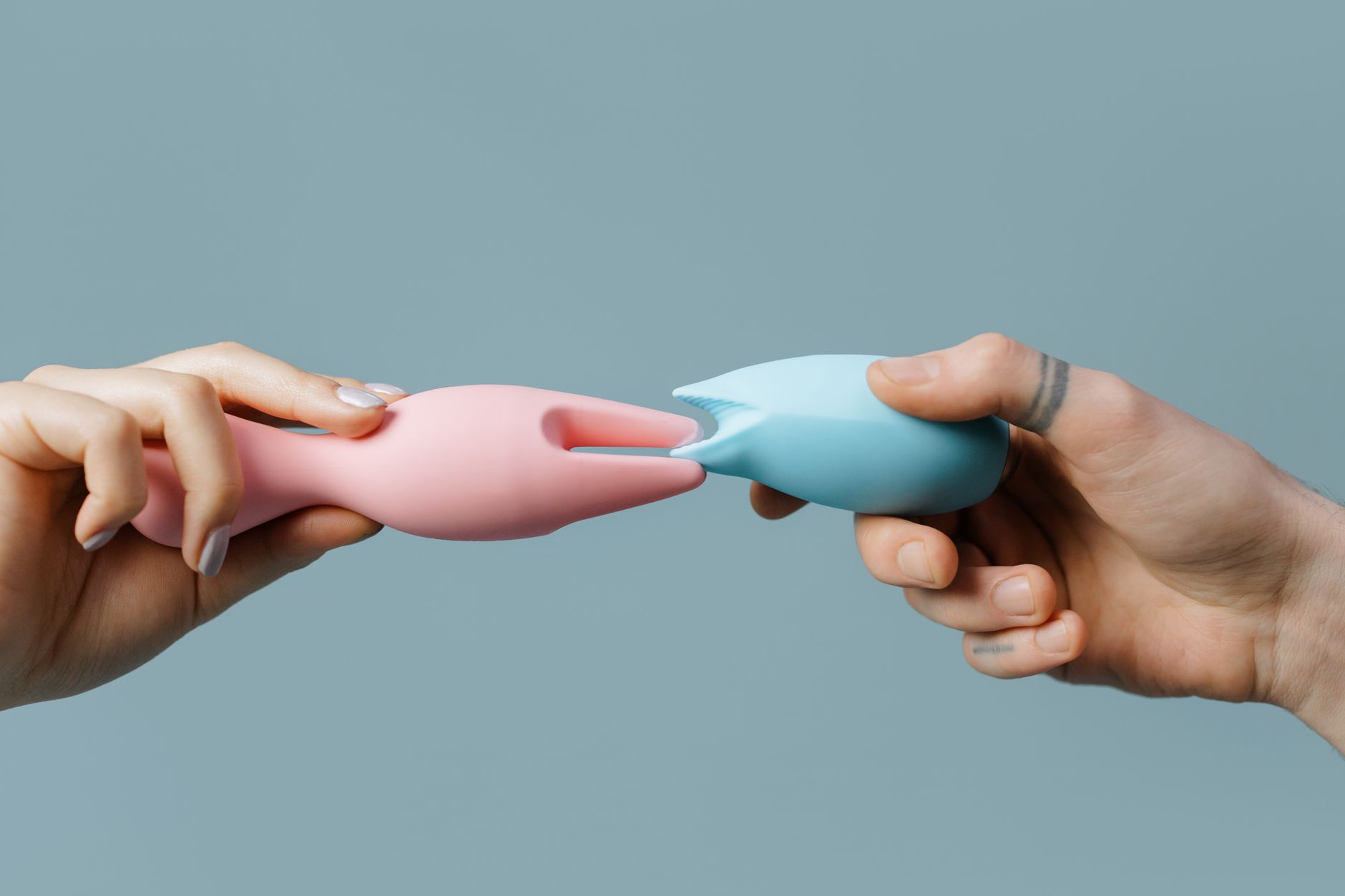
How to Use a Lemon Vibrator When Rebuilding Intimacy After Infidelity
Let's be real. Infidelity doesn't just crack trust. It cracks your relationship to pleasure itself.
After betrayal, sex becomes complicated terrain. Your body doesn't feel safe. Your mind is busy running courtroom scenarios instead of staying present. Your partner feels like a stranger some days, even if you're choosing to stay and rebuild. And pleasure? It feels impossible, or worse, like a betrayal of your own boundaries.
Here's what I tell couples in my practice: rebuilding intimacy after infidelity isn't about forcing sex back to normal. It's about slowly, carefully reclaiming your right to feel good. A lemon clitoral vibrator can be part of that work, not because toys fix betrayal, but because they can help you bypass some of the mental noise and reconnect with sensation in a way that feels entirely within your control.
Why pleasure becomes complicated after infidelity
When someone we trust has been unfaithful, the nervous system doesn't compartmentalize. It flags the entire body as a potential threat.
You might notice that touching your partner feels different. Not wrong, necessarily, but loaded. There's a hypervigilance that creeps in. Your partner initiates sex, and part of you automatically braces. Even if you want to be close, your body has learned not to let its guard down. This is not a failure of love or commitment. This is what trauma does. The brain equates the person who betrayed you with danger, and the body follows.
Meanwhile, if you're touching yourself alone, you might feel guilt. Or anger. Or nothing at all. The pleasure pathways get jammed up with too much emotional static.
This is where a lemon vibrator comes in as a practical bridge. It's not a substitute for the real emotional work of rebuilding trust. But it can be a way to tell your nervous system that pleasure is still possible, that your body still belongs to you, and that sensation can exist separately from the relationship drama.
Solo use first: why going alone matters
Honestly, if you're rebuilding after infidelity, starting with solo play is non-negotiable.
Not because couples play is wrong, but because the stakes are too high right now. Your partner's presence, even well-intentioned, carries the weight of what happened. It's hard to surrender when someone is watching. It's hard to feel safe when the betrayal was sexual.
Using a lemon clitoral vibrator alone gives you something concrete: evidence that your body still works, that you can still orgasm, that pleasure exists independent of the relationship. This sounds simple, but it's revolutionary when you're grieving.
Start with 15 to 20 minutes. No performance pressure. No partner expectations. Just you, the vibrator, and whatever you're feeling. If arousal doesn't show up, that's fine. Keep going. Your nervous system needs to learn that pleasure is safe again, and that learning happens slowly.
The suction action of a lemon vibrator is particularly useful here because it's gentler than direct vibration. You're not fighting numb sensitivity or hypertension in the tissues. The lem's design creates stimulation that feels almost exploratory, which can help you approach your own body with curiosity instead of urgency or desperation.
When you're ready to involve your partner
There's a difference between being ready to try and being ready to be vulnerable.
You're ready when you've had at least a few solo sessions where pleasure felt possible. Not perfect, not fireworks, but possible. That matters. It means your body has a new data point.
Now, involving your partner isn't the same as handing them control. That's crucial. A lemon vibrator can stay entirely in your hands, literally. Your partner can be present without directing the show. They can watch, they can touch you elsewhere, they can hold you, but you stay in charge of the vibrator.
This matters psychologically. Infidelity stripped away agency. You're slowly rebuilding it. A toy that you control, that you can pause or stop at any moment, reinforces that agency in real time.
Start with clear conversation first. Not during sex. Not when anyone is aroused. Sit down when you're both calm and say something like: "I want to try using a vibrator with you present. I need to be the one holding it. Can we try that?" Most partners who are genuinely committed to repair will say yes. If they don't, that's information too.
The weird feelings that might come up
You might feel angry while you're being pleasured. That's normal.
You might orgasm and then cry. Completely normal. That release of tension and emotion together is what healing sometimes looks like.
You might feel guilty for enjoying yourself. That one's worth unpacking in therapy, but it's also common. Pleasure can feel like infidelity to you, somehow, as if your body enjoying a vibrator is comparable to your partner's betrayal. It's not, but the nervous system doesn't always know that.
If shame shows up, pause. Don't push through it. The goal here isn't to get to orgasm at all costs. The goal is to rebuild a safe relationship with sensation. That takes time.
You might also discover that you need your partner to do something different. More communication. More reassurance. Less touching in certain areas. More tenderness somewhere else. A lemon vibrator gives you a concrete experience to point to: "When you were quiet while I used the vibrator, I felt safer." Now you have data to work with instead of just abstractions.
Managing the jealousy and insecurity piece
Here's the thing nobody talks about: sometimes partners get insecure about the toy itself.
They worry that you prefer it to them. That you're replacing them. That they're not enough. These concerns almost always stem from their own guilt or anxiety about the infidelity, not from anything you're doing wrong.
If your partner pushes back on the idea of you using a lemon vibrator together, that's worth exploring. Is it truly about jealousy, or is it shame? Are they avoiding the discomfort of watching you experience pleasure in a way they can't control? That avoidance is the real issue.
You can reassure them without abandoning yourself. Something like: "I know this might feel strange. My using a vibrator doesn't take away from us. It actually helps me want to be close to you, because I'm not in survival mode the whole time."
If they still resist, couples counseling becomes necessary. Genuine repair requires both people to be willing to feel uncomfortable.
The timeline thing nobody gets right
There's no standard recovery arc after infidelity.
For some couples, intimate reconnection takes six months. For others, it takes years. There's no virtue in speed. The couples who rebuild most successfully are the ones who stopped measuring progress and started measuring presence instead.
A lemon vibrator isn't a shortcut. It's a tool. And like any tool, it's only useful if the underlying work is happening: therapy, honest conversations, your partner taking responsibility, you slowly deciding whether staying is what you actually want.
If you're using the vibrator and you still feel distant from your partner, that's feedback. It might mean more time is needed. It might mean you need deeper help. It might mean the relationship isn't repairable, and that's okay too.
The vibrator is there to help you feel present in your body, not to make the relationship feel better than it actually is.
Safety and self-care while you're healing
Use water-based lubricant, always. Your tissues are already managing emotional stress. The right lube makes everything easier.
Keep the lem charged but not obsessively used. Solo pleasure once or twice a week is grounding. Every night can become avoidance. Find the rhythm that feels restorative, not numbing.
Talk to a therapist individually, not just as a couple. You need space to process your own grief and anger separate from your partner's experience. That work is essential.
If at any point using a vibrator together triggers you into flashbacks or panic, stop. There's no timeline. Your body will let you know when it's ready.
FAQ: Rebuilding after infidelity with a lemon vibrator
Can using a vibrator actually help my partner and me reconnect?
It can help you reconnect with yourself, which is the foundation for reconnecting with your partner. When you trust your own body again, you have more capacity to be vulnerable with them. But the vibrator doesn't do the deeper work of repair. Therapy, honest communication, and your partner's genuine accountability do that. The vibrator is supporting player, not the star.
Will my partner feel threatened if I use a lemon clitoral vibrator?
Many partners do feel threatened initially, especially after infidelity, because their confidence is already shattered. The antidote is transparency and reassurance. Use the vibrator, talk about what you experience, invite them to be present. And if they continue to feel threatened after you've been consistent and clear, that's a sign they need individual therapy to process their own guilt and insecurity.
Is it normal to feel guilty while experiencing pleasure with a toy?
Very normal. Your nervous system is associating pleasure with betrayal. Your own pleasure can feel like a mini-betrayal to yourself. This guilt typically softens with repetition and therapy. Each time you experience pleasure safely and alone, your brain learns that sensation doesn't equal infidelity.
How long should I wait before using a vibrator with my partner after infidelity?
Wait until you've had solo success. At least a few sessions where you felt safe and aroused, even if orgasm didn't happen. Then wait a bit longer until you've had multiple conversations about boundaries and what you need. There's no magic number, but rushing it often backfires. Go slow.
What if we use a lemon vibrator together and I still don't feel close to my partner?
That's important feedback. The vibrator isn't a magic fix for broken trust. It's a tool for pleasure, not a relationship repair kit. If you're still feeling distant after using it together, you need more conversation, more therapy, or both. The absence of connection might also be telling you something true about whether this relationship is actually repairable.
Can a lemon vibrator help if I've completely lost interest in sex after infidelity?
It can help rebuild the pathway back to sensation, but it's not a magic wand for desire. Desire often comes back last in the healing process, and that's normal. The vibrator can be a way to gently wake up your body without the pressure of partnered sex. But if your desire is completely gone six months or a year in, that's worth exploring with a sex therapist or couples counselor.
The real work starts before the toy
I want to be clear about something: a lemon vibrator is a useful tool in recovery, but it's not the recovery itself.
The real work is deciding whether you actually want to rebuild with this person. Whether their remorse is genuine. Whether they're willing to do the uncomfortable work of rebuilding trust. Whether you can forgive them, or whether forgiveness isn't actually possible for you. That work happens in therapy, in late-night conversations, in moments of doubt and moments of recommitment.
A toy can help you reclaim pleasure while you're doing that work. It can help you feel present in your body again. It can be a bridge between the person you were before infidelity and the person you're becoming after it.
But the vibrator isn't the bridge itself. You are.
Start with yourself. Solo, safe, no pressure. Let your body remember what pleasure feels like when you're in complete control. Then, if and when you're ready, invite your partner in. Keep the vibrator in your hands. Keep your boundaries clear. And trust the slow, messy process of healing.
That's where real intimacy comes from. Not from forcing sex to feel normal again, but from both of you being willing to feel uncomfortable and awkward and vulnerable while you rebuild something stronger than what broke.