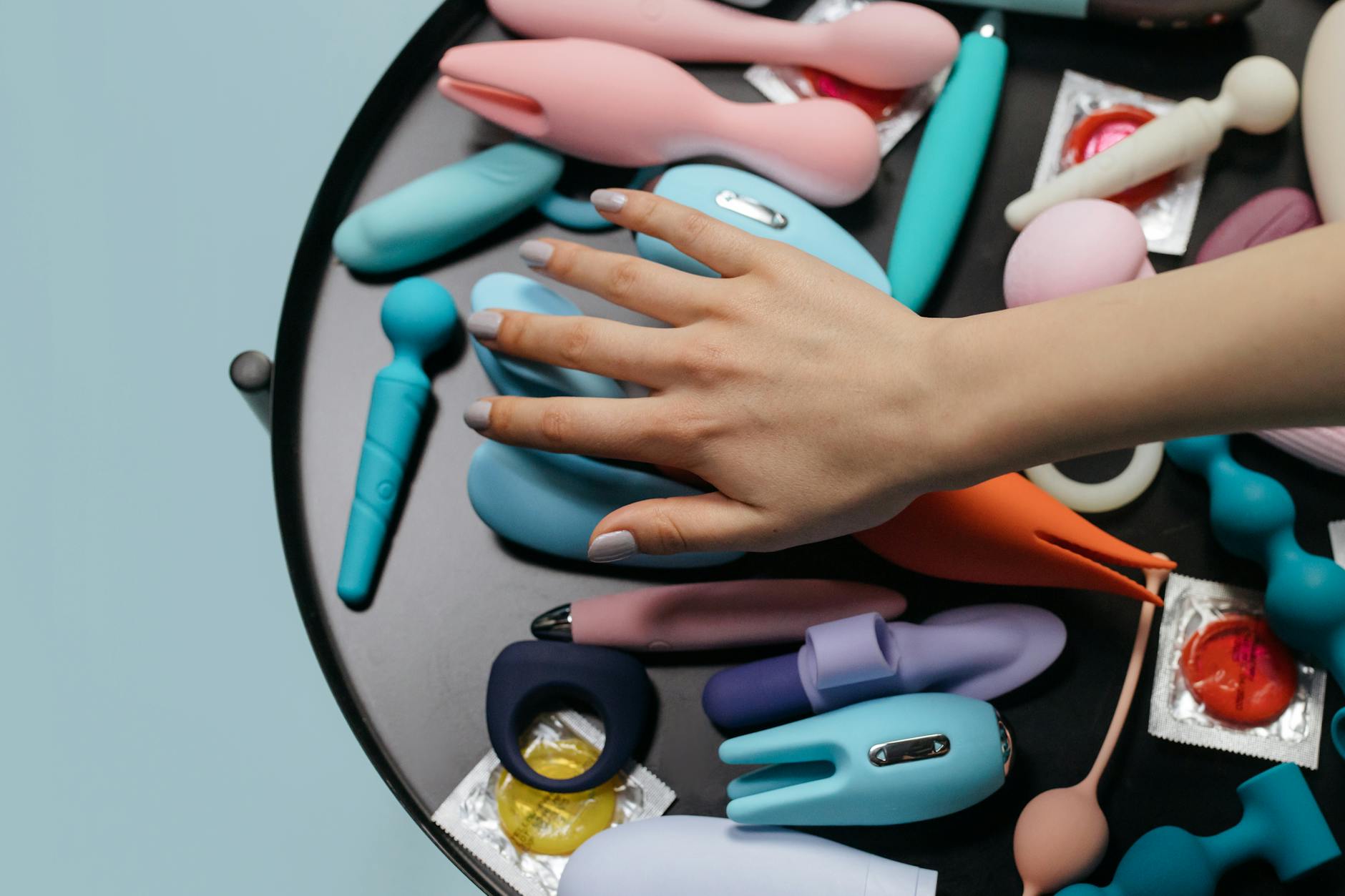
Let's talk about what postpartum actually does to your body
Honestly, nobody tells you this part: pleasure doesn't come back automatically. Six weeks postpartum clearance from your doctor doesn't mean your body feels like it did before. Numbness, reduced sensation, or pleasure that feels muted or distant is not abnormal. It's not permanent either, but pretending it isn't happening won't make it go away faster.
Here's what changes physiologically during pregnancy and birth:
Tissue trauma from vaginal delivery (or healing from cesarean) creates inflammation. Hormonal shifts that happen when you stop being pregnant flip the estrogen and progesterone dial way down, especially if you're breastfeeding. The pelvic floor tightens in protection mode. Blood flow to the clitoris and vulva can take months to normalize. And neurologically, your nervous system is in sympathetic overdrive (fight-or-flight mode) from the intensity of labor, birth recovery, and newborn sleep deprivation.
None of this means your capacity for pleasure is broken. It means your body needs a different approach right now.
Why sensation feels muted or numb postpartum
There are three main culprits.
Pelvic floor tension from birth trauma. During labor, the pelvic floor stretches beyond anything it's experienced. Even after healing, many people hold residual tension in that area as protection. Tight tissue has reduced nerve sensitivity. The clitoris is highly innervated, which is great for pleasure, but only when the surrounding tissue can relax enough to let signals through.
Hormonal crash. Estrogen plummets after birth. Breastfeeding tanks it further. Estrogen feeds sensation in genital tissue. Less estrogen means thinner tissue, reduced natural lubrication, and slower arousal. This is temporary. It reverses when hormone levels stabilize (typically 3-6 months postpartum, or when you wean if breastfeeding). But right now, it's real.
Nervous system dysregulation. You haven't slept more than 90 minutes at a time in months. Your brain is constantly on alert listening for the baby. Your parasympathetic nervous system (the one that allows pleasure and relaxation) is barely operational. Pleasure requires safety. Your nervous system doesn't feel safe. This is the hardest thing to talk about because it's not physical, but it's the biggest blocker.
Why a lemon clitoral vibrator helps when sensation is low
Clitoral vibrators, especially the suction-based design of the Lem, work with your postpartum body rather than against it.
Suction creates consistent, non-fatiguing stimulation. You don't have to do anything. The pressure builds gradually and maintains without numbing. Traditional vibration can feel dull or require increasing intensity over time (leading to that dreaded numbness). Suction stimulates in a way that awakens the nerve endings without exhausting them.
The Lem's gentler patterns start exactly where sensation is low. Settings 1 and 2 are genuinely mild. You can spend 15-20 minutes building sensation slowly instead of jumping straight to intensity. This is not wasting time. This is resensitizing.
It requires zero physical effort from you. Your body is already depleted. You don't need to move, angle yourself, or maintain rhythm. You can lie still and let sensation come back to you. This matters more than you think.
Pleasure without intercourse pressure. A lot of people try penetrative sex too soon because they feel obligated to get back to "normal." A lemon vibrator for solo or partnered clitoral play removes that pressure. You can rebuild sensation without the expectation of penetration.
How to actually use it: a realistic postpartum approach
Here's what I recommend to clients rebuilding sensation after birth:
Timing and context matter more than duration. Use it when the baby is asleep and you're not running on fumes. Even 10 minutes of genuine pleasure is better than 30 minutes of distracted effort. Early morning or right after the baby naps can work better than evening when you're already depleted.
Start with your body cold. No warm-up, no buildup. Just you and the vibrator. Set it to pattern 1 or 2. Hold it gently against the clitoris without pressure. Suction will draw slightly. Let that be enough for now. Your job is to notice sensation returning, not to chase orgasm.
Use water-based lubricant even if you think you don't need it. Postpartum tissue is thinner and more sensitive. Lube reduces friction irritation and helps you actually feel pleasure instead of discomfort. This is one of the easiest wins.
Expect 15-25 minutes before your body starts responding. This is not a sign of dysfunction. This is normal postpartum recovery. Arousal takes longer to build when your nervous system is dysregulated and estrogen is low. Patience here is the skill.
Track what sensations come back first. Does the tip of the clitoris wake up before the body? Does pleasure feel more localized or diffuse? These details matter because they tell you what's healing. Noticing progress keeps you engaged instead of frustrated.
Stop if something feels wrong. Pain, intense burning, or sharp sensations mean something is still healing. Back off. Try again in a week. This is information, not failure.
Combining the Lem with nervous system recovery
The vibrator is one piece. The nervous system piece is the other.
You cannot pleasure your way back to sensation if your nervous system is still in crisis mode. You need the other half of the equation.
Honestly, this is where a lot of postpartum couples get stuck. The partner wants to help, the birthing person wants to feel pleasure again, but the actual barrier is that the nervous system isn't ready. No amount of lemon clitoral vibrator use fixes that alone.
Here's what actually helps your nervous system down-regulate enough to feel pleasure:
Regular, predictable sleep. I know. Not possible with a newborn. Even 2-3 consecutive nights where someone else takes the baby and you sleep uninterrupted shifts the nervous system. One night of real sleep changes everything.
Physical safety. You need to know the baby is okay without needing to monitor constantly. A partner taking the baby into another room for an hour while you're in bed. A family member visiting specifically so you can rest. Permission to step away. Permission to know the child will be fine.
Slowing down during sex. This is not the time for efficiency. If you and your partner are intimate, slower tempo, more attention to sensation rebuilding than goal-oriented behavior. Check in. Stop if it doesn't feel good. This is actually where using the Lem together can help because it shifts the focus to your pleasure and sensation, not penetration performance.
Movement. A 20-minute walk where you're not carrying the baby or thinking about the baby. This regulates the nervous system more reliably than anything else.
When to get additional support
If six months postpartum sensation hasn't returned or has actually worsened, talk to your OB or a pelvic floor physical therapist. Postpartum pelvic floor dysfunction is real and treatable. You don't have to white-knuckle through it.
If depression or anxiety is present, address that first. Pleasure cannot reliably return when depression is running the show. This is not weakness. This is neurobiology. Postpartum mood disorders are medical conditions that respond to treatment. Pleasure rebuilds after treatment, not during the condition.
If your partner doesn't understand why things feel different or pressures you to "get back to normal," that's a relationship issue, not a pleasure issue. How to use a lemon vibrator when your partner avoids intimacy addresses some of that dynamic.
The timeline nobody mentions
Most people regain baseline sensation around 3-4 months postpartum if they're not breastfeeding, and closer to 6-9 months if they are. This isn't linear. Some days sensation returns. Some days it feels like you're back at square one. That's normal nervous system healing.
Many couples report that pleasure actually becomes richer after postpartum recovery because they're moving intentionally instead of habitually. You're using tools like the Lem. You're checking in instead of assuming. You're building pleasure deliberately instead of taking it for granted. That's the part nobody tells you: postpartum can actually deepen intimacy if you're willing to be honest about what the body needs right now.
Your pleasure didn't disappear. It's reorganizing. The Lem meets you exactly where you are.
People also ask
How soon postpartum can I use a lemon vibrator?
Wait for full medical clearance, typically 6 weeks after vaginal delivery or 8-12 weeks after cesarean. Even after clearance, start gently. If there's any pain, bleeding resumption, or unusual discharge, wait longer and check with your provider. Your body will tell you when it's ready.
Can using a lemon clitoral vibrator help rebuild sensation faster?
Yes and no. The vibrator itself can't speed hormone recovery or nervous system regulation. But consistent, gentle stimulation does help rewake nerve pathways and can make the experience feel better sooner. Think of it as accelerating your awareness of sensation returning, not forcing sensation to return faster. You'll notice improvements more quickly because you're actively noticing instead of waiting passively.
Is postpartum numbness permanent?
In the vast majority of cases, no. Sensation returns as hormones normalize and the nervous system down-regulates. This takes weeks to months, not years. If numbness persists beyond 12 months postpartum, mention it to your OB or a pelvic floor physical therapist. It could indicate something like nerve damage or pelvic floor tension that benefits from specific treatment.
What if I feel pressure to have sex but my body doesn't want to?
Trust your body. Full stop. Postpartum is not the time to push past discomfort or numbness to keep a partner happy. If your partner is pressuring you, that's a boundary conversation. If you're pressuring yourself, give yourself permission to rebuild pleasure on your actual timeline. Many couples rebuild intimacy through non-penetrative touch first. The Lem is perfect for this because it's partner-inclusive if you want it to be, or completely solo if that's what feels safe.
Can I use a lemon vibrator while breastfeeding?
Yes. Postpartum hormones affect sensation and response time regardless of feeding method, but breastfeeding does amplify the effect. Oxytocin from breastfeeding actually helps bonding but can reduce sexual arousal temporarily (your body is prioritizing the baby biologically). This is temporary. Using the Lem during breastfeeding months just means being patient with your body's timeline. It will shift again when you wean.
Should I use the Lem solo or with my partner postpartum?
Start solo if you want to. This removes performance pressure and lets you focus purely on sensation. Many people feel safer rebuilding pleasure alone first, then gradually bringing their partner into the experience. There's no rule. Solo exploration gives you data about what works before involving someone else.