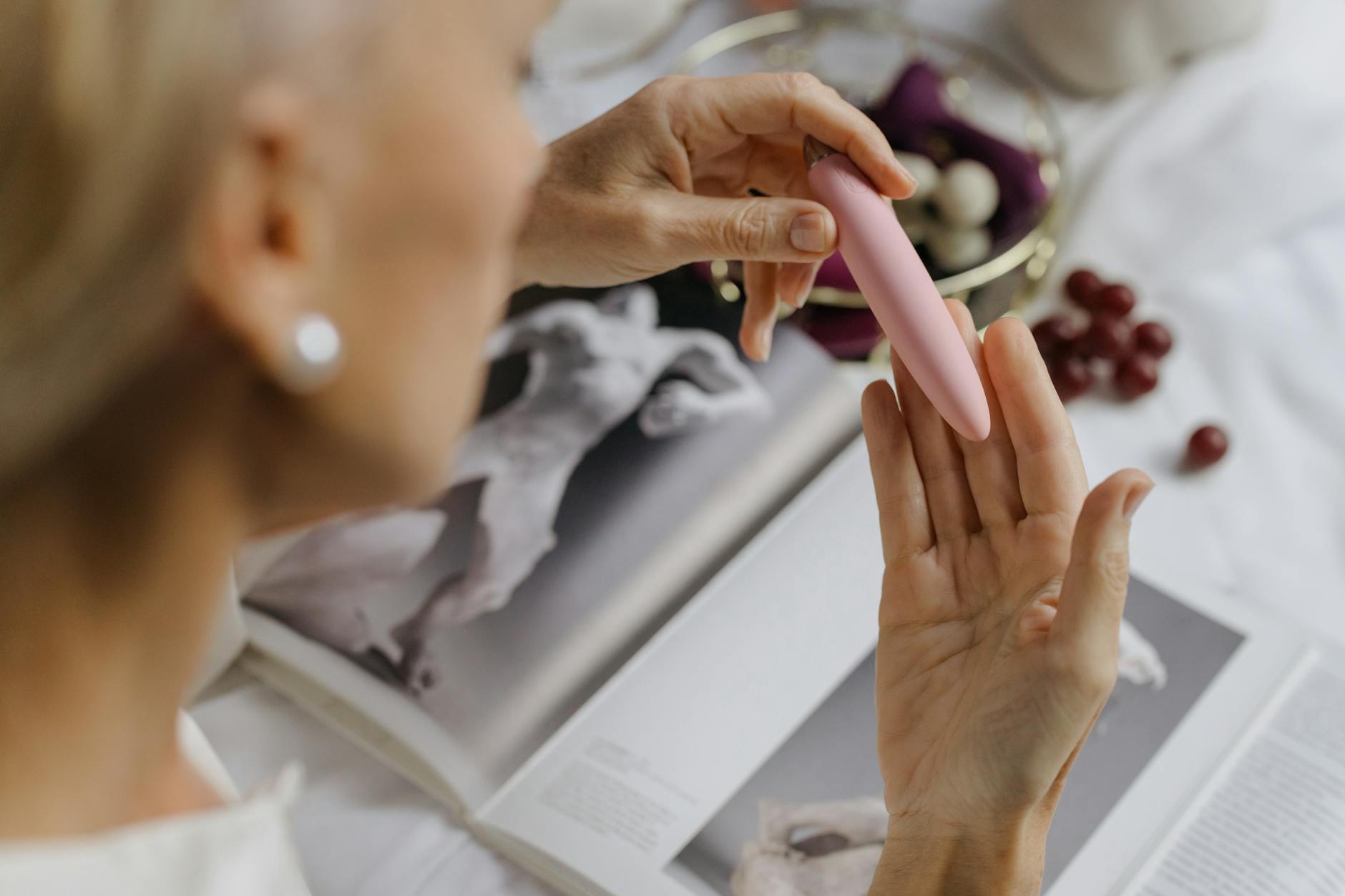
Here's the thing about anxiety and pleasure
Relationship changes shuffle everything. A breakup, a new partner, a shift in how your existing relationship functions. Suddenly your body feels like unfamiliar territory. You might feel anxious about wanting pleasure at all, or anxious that your body won't respond the way it used to, or anxious that you're "supposed" to want something you don't anymore. That's not broken. That's your nervous system protecting you.
Anxiety and pleasure literally live on opposite sides of your brain. When your sympathetic nervous system is activated (the fight-or-flight response), the parasympathetic nervous system (responsible for arousal and relaxation) gets sidelined. You can't force pleasure through anxiety. But you can use a tool like a lemon vibrator to gently flip that switch back.
Why a lemon vibrator helps with post-relationship anxiety
A lemon clitoral vibrator works differently than your fingers or penetrative sex with a partner. It's not about performance or proving anything. It's about sensation without judgment.
Here's what makes a lemon vibrator specifically useful when you're anxious: The suction-pulse technology focuses stimulation on the clitoral complex in a way that feels almost like external pressure rather than deep penetration. There's nothing to "perform" for. No partner watching. No need to come on a timeline. The Lem vibrator doesn't require your body to be in a specific state of readiness. You can start at pattern 1, which is gentler, and there's nowhere to go except where you want.
When you're rebuilding trust with your body, that gentleness matters. A lot.
Starting over after a relationship ends
Breakups rewire your nervous system temporarily. Even if the relationship wasn't good, even if you wanted it to end, your brain still experienced it as a loss. Your body was used to one person's touch, one rhythm, one set of expectations. Suddenly that's gone. Using solo pleasure to reconnect with your own body isn't betraying the relationship you just left. It's remembering that your pleasure was never dependent on that partnership in the first place.
Start by using your lemon vibrator in a context that feels completely separate from the old relationship. Different room, different time of day, different ritual. If sex with your ex-partner happened at night in bed, try morning. If you always had sex after they initiated, try solo time without any external prompt. The goal isn't immediate intense pleasure. The goal is breaking the association between pleasure and that specific person.
Photo by Ron Lach on Pexels
When you're navigating a new partner
Anxiety around pleasure with a new partner is wildly common and usually invisible. You're nervous that your body won't respond the same way. You're worried that this new person will judge you if pleasure takes longer or feels different. You're anxious that wanting solo time with a vibrator means something is wrong with the new relationship.
None of that is true. Using a lemon vibrator solo, especially early in a new relationship, actually strengthens your capacity for pleasure with that partner later. Here's why: When you know your own body's response patterns independently, you can actually communicate them. You're not scrambling to figure out what you like while also managing another person's experience.
Use your lemon vibrator at least a few times before introducing it into partnered sex. Let your body remember its own baseline of arousal and response. You're not preparing a performance. You're gathering data.
Managing the anxiety itself while using a lemon vibrator
Anxiety doesn't just disappear when you turn on your vibrator. Sometimes it gets louder. Here are four things that actually help:
1. Breathwork before, not during. Spend two minutes doing box breathing (four counts in, hold four, out four, hold four) before you even pick up your vibrator. This signals your nervous system that this is safe.
2. Keep the patterns low. Start at 1 or 2 on the Lem vibrator. Intensity can feel like it's feeding anxiety rather than pleasure. Gentler stimulation gives your brain permission to stay present instead of bracing.
3. No goal except sensation. Remove the idea that you need to orgasm. That's pressure disguised as freedom. Instead, check in every 30 seconds: What do I feel? What texture is this? Is this comfortable right now? That investigative stance keeps your prefrontal cortex engaged, which actually calms the amygdala (your brain's alarm system).
4. Have a stopping point. Set a timer for 15 or 20 minutes. Anxiety sometimes feeds on open-endedness. Knowing there's a boundary actually releases pressure.
The specific conversation to have with a new partner
If you're nervous about whether using a lemon clitoral vibrator will hurt a new relationship, here's the honest approach: Use it solo first. Once you've reconnected with your own pleasure, then you can decide if you want to introduce it partnered. You don't owe that explanation upfront. Your body is yours.
If and when you do bring it up, frame it as information, not criticism. "I'm reconnecting with my body using a vibrator on my own time" is different from "I need this because you're not doing something right." One is about you. The other creates defensiveness.
When anxiety about pleasure lingers
If you're using your lemon vibrator consistently for a few weeks and anxiety is still the dominant feeling, that might be a signal that you need to process something with a therapist. Post-relationship anxiety sometimes masks grief, betrayal, or attachment wounds that a vibrator can't solve alone. That's not a failure. It's just knowing the limits of what a tool can do.
A lemon vibrator is excellent for reconnecting with sensation and breaking anxious loops around pleasure. It's not a replacement for working through relational trauma or attachment anxiety with a trained professional. Both can exist in the same healing timeline.
Rebuilding your pleasure identity
Here's what nobody tells you: When a relationship ends or shifts, your pleasure identity shifts too. You're not just starting over physically. You're figuring out who you are sexually outside of that context. That rebuilding takes time, patience, and gentleness.
Using a lemon vibrator during this process isn't indulgent. It's essential. Your body is learning that pleasure is something you can access independently, on your own terms, without waiting for permission or a partner or the "right" circumstances. That's resilience. That's what anxiety-free pleasure actually looks like.
FAQs
How soon after a breakup should I use a vibrator?
There's no magic timeline. Some people need a few weeks to sit with the loss. Others jump in immediately because it helps them reclaim agency. The key is checking your motivation. Are you using it to feel better, or to avoid feeling something? Both are valid, but they feel different in your body. If you notice you're using it to escape, that's a sign to pause and maybe journal or talk to someone instead.
Can using a lemon vibrator alone damage my ability to enjoy sex with a new partner?
No. The opposite, actually. Knowing your own pleasure independently makes partnered sex easier, not harder. You're not anxiously waiting for your partner to "make" you feel something. You already know what your body is capable of.
What if I feel guilty using a vibrator when I'm in a new relationship?
That guilt usually comes from the belief that your pleasure "belongs" to your partner now. It doesn't. Solo pleasure and partnered pleasure use different neural pathways. Using a lemon vibrator alone isn't cheating or betrayal. It's maintenance.
How do I tell a new partner I use a vibrator?
You don't have to announce it. If you want to, keep it simple: "I use a vibrator solo, and that helps me know my body better." Most partners appreciate the clarity. If someone gets defensive about that, that's useful information about compatibility.
Does anxiety get in the way of orgasm when using a lemon vibrator?
Absolutely. Anxiety is literally the enemy of orgasm because it hijacks the nervous system. That's why the gentler patterns on the Lem vibrator help. You're not chasing orgasm. You're just exploring sensation until your body naturally relaxes enough for climax to happen.
What if using a vibrator brings up emotional stuff?
That's really normal after relationship changes. Your body holds emotions. Sometimes when you reconnect with sensation, grief or anger comes up. That's not a sign to stop. It's a sign you're healing. Sit with it, cry if you need to, and keep going gently.
The bottom line
Anxiety around pleasure after relationship changes is your nervous system asking for time and gentleness. A lemon vibrator isn't a magic fix. But it's a tool that lets you reconnect with your body without performance pressure, without judgment, and without anyone else's expectations. That's where real, anxiety-free pleasure lives.
Start here. Be patient with yourself. Your pleasure is worth rebuilding.