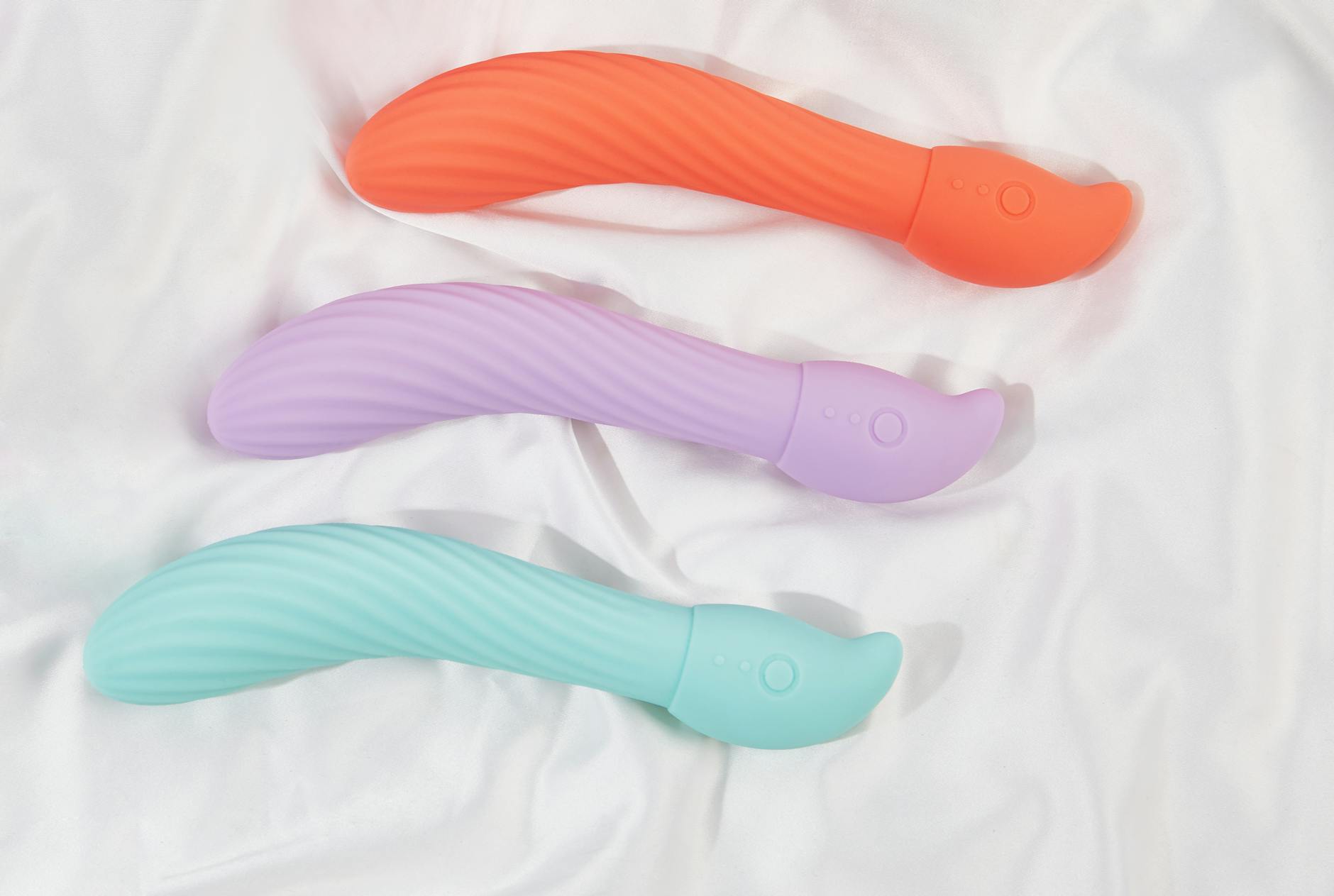
Let's start here: vaginismus is not your fault
If your body tightens involuntarily when penetration approaches, or if even the idea of it triggers panic or pain, you have vaginismus. It's a protective response, not a character flaw. Your nervous system learned something hurt, and now it's doing its job by clamping down. That's not broken. That's survival.
The tricky part is that vaginismus doesn't just live in your vagina. It lives in your nervous system, your pelvic floor muscles, and the stories you've built around pleasure and safety. Healing from it requires addressing all three at once. And here's where lemon clitoral vibrators come in.
They're not about forcing penetration. They're about learning what pleasure feels like outside the zone of fear.
Why clitoral stimulation is different for vaginismus recovery
When trauma or chronic tension live in your pelvic floor, the vaginal opening and canal become a threat center. Your body says no before your brain can negotiate. Trying to push through that is like asking someone with a phobia to "just relax." It doesn't work.
Clitoral stimulation, though, bypasses that panic pathway. The clitoris has its own nerve pathway entirely separate from the vaginal muscles. When you stimulate it without any pressure on or near the vaginal opening, your nervous system gets the signal: pleasure is possible here. You're safe here.
Lemon vibrators, especially the suction-based design, are gentler on sensitive tissue and don't require the direct friction of traditional vibrators. For people with vaginismus, that gentleness matters wildly. You're not fighting against a device. You're learning with it.
Building your nervous system safety first
Before you even touch a lemon vibrator, your environment needs to say "safe" to your body. This sounds basic, but it's non-negotiable.
Take 10 to 15 minutes to set up your space. Lock the door. Silence your phone. Dim the lights or light a candle. Some people play music, others prefer silence. What matters is that your nervous system knows it's not on guard duty.
Wear something you feel good in. Not lingerie if that triggers performance mode. Not clothes if that triggers control issues. Something neutral that lets you be present.
Then sit with yourself for a few minutes. Notice your breathing. Notice where your body feels tense. Don't try to relax it yet. Just notice. This is called interoception, and it's the skill your body needs to relearn.
The first week: sensation mapping without the vibrator
I ask most clients with vaginismus to spend the first week exploring touch without any tool at all. Use your hand.
Start with areas far from the vagina. Stroke your thighs. Your lower belly. Your inner thighs. Notice what feels good, what feels neutral, what feels like it's putting you on alert. You're training your brain to recognize pleasure signals that aren't in the panic zone.
When you're ready, bring your hand to the outer labia. Move slowly. Breathe steadily. If you feel the pelvic floor clench, pause. Don't push through it. That's your nervous system saying "not yet," and respecting that message is how trust rebuilds.
The goal isn't orgasm. The goal is data. What touches feel safe? What temperature? What pressure? Write it down if you want to. This information is your map for introducing the vibrator.
Introducing the lemon vibrator: your second week
Once you've spent a week with your own touch and you're noticing moments where your pelvic floor relaxes, introduce the lemon vibrator.
Start with it on the lowest setting. The Lem vibrator has pattern settings 1 through 10. You'll live in settings 1 and 2 for a while. That's not a limitation. That's wise.
Place the vibrator against your vulva, not inside your body. Rest it on your outer labia or your clitoris. Let the sensation build slowly. Your job isn't to orgasm. Your job is to notice what happens in your body when pleasure is available but there's zero pressure.
If your pelvic floor tightens, turn the vibrator off. Breathe. Rest your hand on your lower belly and feel the tension ease. Then try again in a few minutes. This pattern teaches your body that pleasure isn't a race and that stopping is always an option.
Weeks three and four: depth and variation
By week three, most people can stay with the vibrator for 10 to 15 minutes without major pelvic floor tension. At that point, you can experiment with settings 2 and 3. You can move it around. You can hold it in different ways.
Here's what often happens around this time: people start to feel a shift. The vibrator stops feeling like a medical device and starts feeling like a source of pleasure. That shift is your nervous system downregulating. It's a big deal.
If you're in a relationship, this is not the moment to ask your partner to join in. Vaginismus recovery is profoundly solo work first. Your body needs to know it can experience pleasure without audience, without expectation, without anyone else's nervous system in the room. Solo exploration teaches your nervous system that you're the expert on your own pleasure.
Managing the disconnect when old trauma surfaces
At some point in recovery, old sensations or memories might come up during arousal. This is normal and doesn't mean you're failing. It means your body is processing.
If a memory surfaces, pause immediately. Turn off the vibrator. Put your hands on your body in a grounding way. Feel your feet on the floor. Name five things you can see. This is called grounding, and it's a tool that helps your nervous system distinguish between then and now.
After grounding, you can return to the vibrator or you can take a break. There's no timeline here. Recovery is incremental, not linear.
When vaginismus and depression or anxiety overlap
Many people with vaginismus also carry anxiety or depression. These conditions often live in the same nervous system wiring. If you're on anxiety medication or struggling with depression, please know that can affect arousal. The lemon vibrator can still help, but your expectations might need adjusting.
Lower intensity, longer warm-up time, and radical patience become even more important. Some days you'll get 30 seconds of calm pleasure. That's a win. There's no minimum threshold for recovery.
The role of a therapist in this process
Lemon clitoral vibrators are a tool, not a cure. If you're healing from trauma related to vaginismus, working with a trauma-informed therapist or sex therapist is invaluable. They can help you process what comes up, teach you nervous system regulation strategies, and help you understand the root of the tension.
A good therapist won't tell you to "just relax." They'll help you retrain your nervous system's threat response. That's real work, and it's worth the investment.
What solo pleasure teaches you about partnered sex
Once you've spent several weeks exploring pleasure with a lemon vibrator solo, you understand something crucial: your pleasure is separate from your partner's desire. It's yours. It belongs to you. It doesn't exist to prove anything or satisfy anyone.
That knowledge changes everything in partnered sex. You're not performing. You're not trying to fix yourself for someone else. You're bringing a version of yourself that knows what feels good and has permission to ask for it.
When you're ready to introduce a partner into the space, start with non-penetrative touch. Communicate constantly. Your partner's job isn't to penetrate you. Their job is to witness you experiencing pleasure and to respect your pacing.
FAQ: Questions people actually ask about this
Can I use a lemon vibrator if I have severe vaginismus and can't insert tampons?
Yes, absolutely. A lemon sucker is purely external clitoral stimulation. There's no insertion involved. You're not asking your pelvic floor to relax around an object. You're just exploring what pleasure feels like outside the zone of tension. That's exactly where recovery starts.
How long does it usually take before vaginismus gets better?
There's no fixed timeline. Some people see improvement in weeks. Others take months. It depends on the trauma, the severity of the tension, whether you're in therapy, and how consistently you practice. The key is consistency, not intensity. Ten minutes three times a week is better than one 90-minute marathon session.
What if I start using a lemon vibrator and I feel worse?
Stop and seek support. Sometimes introducing external stimulation brings up emotions or sensations that need processing with a professional. That's not a sign that vibrators are bad for you. It's a sign that your nervous system needs more support than a tool alone can provide. Combine the vibrator with therapy for the best results.
Is there a "right" orgasm to chase during recovery?
No. Some people with vaginismus experience clitoral orgasms easily. Others take time. Some find that pleasure and orgasm are separate things and that's fine. The goal isn't a specific kind of orgasm. The goal is nervous system recovery and reclaiming your body as a source of sensation and joy.
Should I tell my partner I'm using a vibrator for this?
If you're in a relationship, yes, eventually. But not on day one. Spend time solo first. Understand your own pleasure. Then, when you're ready, let your partner know: "I'm working on healing my relationship with my body. I'm using a vibrator as part of that. I'd like your support, but I'm not ready to involve you yet." Most partners respect that honesty.
Can a lemon clitoral vibrator replace therapy for vaginismus?
No. A lemon vibrator is a tool that works best alongside professional support. Therapy addresses the nervous system patterns and trauma underneath the tension. The vibrator addresses the sensation and pleasure side. Together, they're powerful. Alone, the vibrator is just a device.
The bigger picture: your body knows how to heal
Vaginismus isn't a life sentence. It's a symptom of a nervous system that's doing exactly what it was designed to do: protect you from danger. The path forward isn't forcing your body to cooperate. It's proving to your nervous system that pleasure is safe again.
A lemon vibrator, used thoughtfully and patiently, is one of the clearest ways to send that message. It says: pleasure exists outside the zone of pain. You get to explore it at your own pace. No one's timeline matters but yours.
Your recovery is possible. It takes time. It takes support. And it takes believing that your body wants to heal just as much as you do.
Resources for next steps
If you're ready to explore how a lemon vibrator fits into your recovery, start with the basics of clitoral stimulation. If you're in a relationship and want to know how to eventually bring your partner into this healing journey, read about communicating with your partner about vibrator use.
Most importantly, consider working with a trauma-informed therapist who specializes in vaginismus or sexual trauma. That combination of professional support and self-directed exploration with a tool like the Lem vibrator creates the conditions for real, lasting change.