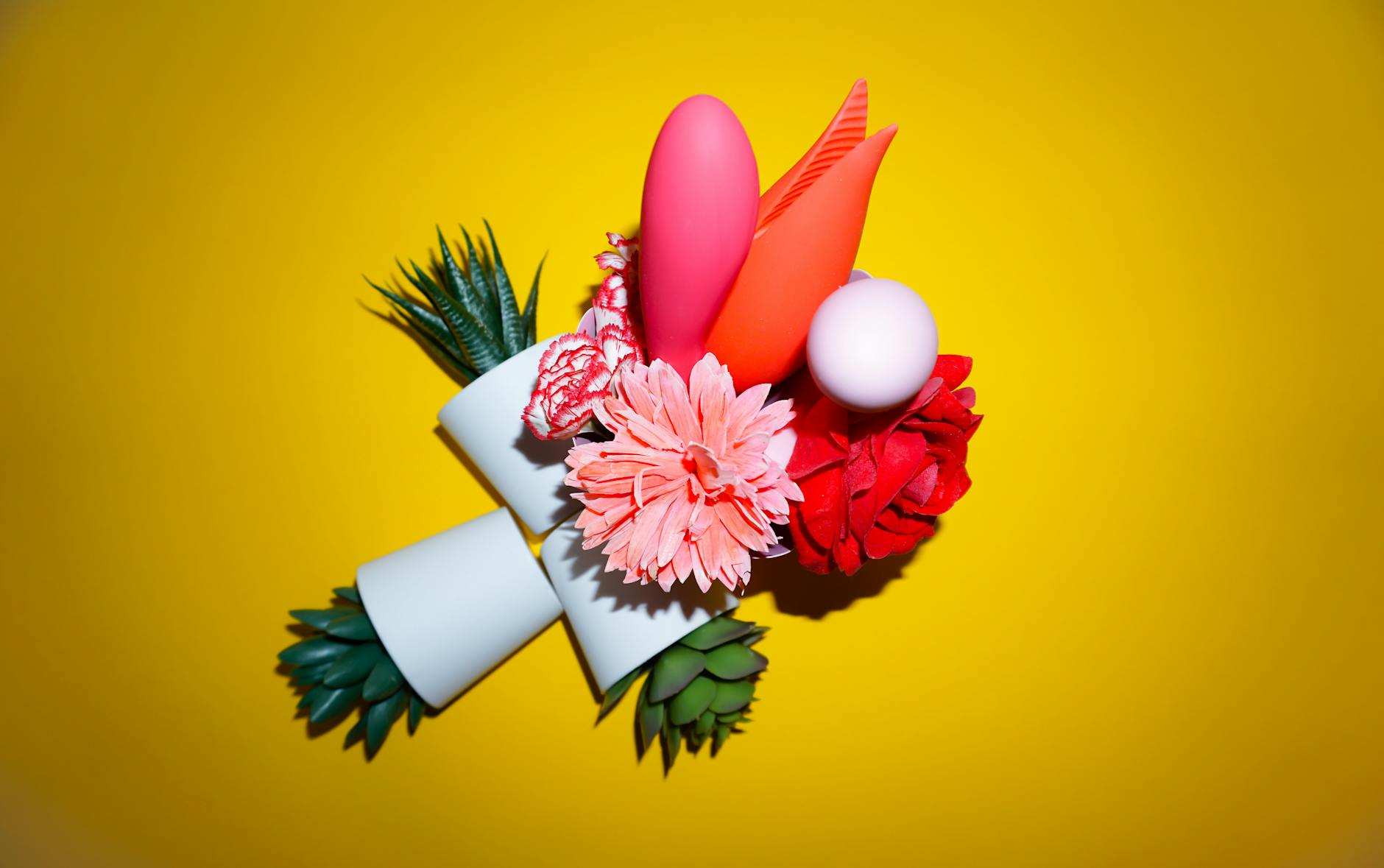
Let's start with the hard truth
When a long-term relationship ends, your body becomes unfamiliar to you. Not because anything broke. But because for years, maybe decades, your pleasure was tangled up with someone else's presence, timing, and touch. Now you're alone in your body again, and it feels strange.
Most people don't talk about this part of breakup recovery. They talk about healing and moving forward. But rebuilding solo pleasure after relationship loss is its own process entirely, and it deserves real strategy, not just good intentions.
Why solo pleasure feels different now
When you were partnered, pleasure existed in context. Someone else's desire was part of the equation. Your arousal was responsive to them. Your touch happened in dialogue, not monologue.
Now you're rediscovering pleasure on your own terms, which should feel freeing. Often it just feels confusing instead.
Three things get tangled together after a relationship ends. First, there's actual grief. Your body misses touch, even if your mind knows the relationship needed to end. Second, there's guilt. You might feel like you shouldn't want pleasure yet, or that wanting it means you're moving on too fast, or too slow, or wrong somehow. Third, there's the simple fact that your nervous system learned a specific rhythm with another person, and now it has to relearn its own.
Add in the fact that many people internalize their partner's preferences as their own, and you're not just rebuilding pleasure. You're figuring out what pleasure actually means to you, independent of anyone else's expectations.
The case for external stimulation (not distraction)
Here's where a lemon clitoral vibrator changes the math. Air-suction toys like the Lem are designed to do one thing really well: activate nerve endings without requiring you to do much interpretive work.
When you're solo and grieving, you don't need a toy that demands emotional presence or performance. You need one that offers sensation without narrative. A lemon vibrator does exactly that.
The suction pattern means your body receives clear, consistent input. You're not guessing whether you're doing it right. You're not comparing this moment to how things used to feel with someone else. You're just receiving sensation, and your nervous system gets to respond to it freely.
That simplicity matters more than it sounds. When your brain is still processing loss, a straightforward physical sensation is a gift.
Timing: when you're actually ready
Ignore anyone who tells you there's a timeline for this. Some people feel ready to explore solo pleasure within weeks of a breakup. Others need months or years. Both are fine.
But here's what I notice clinically: many people wait for themselves to feel "healed" before they return to pleasure. They think, "Once I'm done grieving, then I'll reclaim my sexuality." That's backwards. Pleasure, when approached with honesty, is actually part of healing. Not a finish line, but a waypoint.
You'll know you're ready when the idea of touching yourself stops feeling sad or wrong, and starts feeling like something you want to do for yourself. Not to prove you're over it. Not to distract from pain. But because your body is asking for attention, and you want to give it.
When that shift happens, a lemon vibrator becomes incredibly useful. You're not grieving through the experience. You're actually present for it.
Setting up your first solo session with a clitoral vibrator
Four practical things that make a real difference.
First: privacy and time. You need both. Not hours, necessarily. But enough time that you're not rushing, and enough privacy that you can actually relax. If you're sharing a home with others, a locked door and a reasonable window of time matter. This isn't about secrecy. It's about creating conditions where your nervous system can settle.
Second: no performance narrative. The old pattern in a partnership was often goal-oriented: build toward something, reach an endpoint, finish. Solo pleasure doesn't have to follow that shape. You might explore sensation for ten minutes and stop. You might build slowly over forty. You might use your lemon vibrator and discover it doesn't feel good that day, and that's information, not failure.
Third: start at low intensity. The Lem has multiple patterns. Most people recovering from relationship loss do better starting at patterns one through three. Your nervous system is still recalibrating. Let it adjust before you turn up the intensity.
Fourth: no phones. I know this is obvious, but I mean it. No checking time, no scrolling between sensations, no taking photos. Just you and your body and the vibrator. Ten minutes of actual presence beats thirty minutes of half-attention every single time.
What you might notice (and what it means)
Your body might feel less responsive than it used to. That's not permanent. It's what happens when your nervous system has been in a partnership pattern and suddenly it isn't. Sensation takes longer to register. Arousal builds slower. Orgasm might feel different, or might not happen at all the first few times. None of that is abnormal. All of it normalizes with practice.
You might also notice sadness or grief coming up during or after. That's okay. Your body holds emotions, not just sensation. If you find yourself crying while using your lemon vibrator, you don't need to stop or feel like something went wrong. Feel what comes up. Then keep going, or rest. Your call.
Some people report that solo pleasure after a long-term relationship feels more intense, more focused, more purely for them. That can shock you. You might have been told that partnered sex is better, more fulfilling, more real. That's not universally true. Solo pleasure with the right tool can be profoundly satisfying in ways partnered sex wasn't.
Reframing ownership
Here's the mindset shift that actually changes everything: your pleasure belongs to you now. Not to grieve. Not to fix. Not to prove anything. Just to yourself.
When you use a lemon clitoral vibrator solo after relationship loss, you're not replacing your ex. You're not distracting yourself from pain. You're actually building a foundation for the next chapter, whatever that looks like. You're reminding your body that it's capable of sensation and arousal independent of anyone else. You're proving to yourself that intimacy with yourself is real, valid, and available to you whenever you want it.
That's not selfish. That's reclaiming something that was always yours.
FAQ: Solo pleasure after relationship loss
Is it weird that I feel guilty using a vibrator after my relationship ended?
Not weird at all. If you spent years prioritizing your partner's comfort or pleasure, shifting to solo pleasure can feel selfish at first. It's not. Your body needs attention and sensation. A lemon vibrator is just a tool that makes that easier. Guilt usually fades once you realize that taking care of your own pleasure actually makes you more available to others later, if you choose partnership again.
How long does it take before solo pleasure feels normal again?
That varies wildly. For some people, a few weeks. For others, several months. The timeline isn't about how much you loved your partner or how hard the breakup was. It's about how much your identity was tangled up in partnership, how your nervous system learned arousal patterns, and what you actually need to rebuild. If it's been more than six months and pleasure still feels completely impossible, consider talking to a therapist or sex coach who specializes in post-relationship recovery.
Should I tell myself I'm healing while I use a vibrator, or just enjoy it?
Just enjoy it. The moment you frame every solo pleasure session as "healing work," you turn it into performance again, just a different kind. Let solo pleasure be genuinely selfish. Do it because it feels good. That's the whole point.
What if I compare myself to how things were with my partner?
That's normal, and it usually fades. The first few times, you might notice you're thinking about your ex, or comparing sensation, or wishing someone was there. That means your mind is still processing the loss. That's information, not a problem. Keep using your lemon vibrator anyway. Over time, the comparisons get quieter, and the sensation gets louder. Your nervous system adjusts.
Can a lemon clitoral vibrator help with the feeling of being touch-starved?
Partially. A vibrator is not the same as human touch. It doesn't replace that. But clitoral stimulation does activate your nervous system in ways that reduce stress and create physical pleasure. If you're touch-starved and single, a lemon vibrator can meet one specific need: direct clitoral pleasure. It won't replace the feeling of being held or kissed. But it will remind you that your body is capable of joy independent of partnership.
Is it okay to use a lemon vibrator if I might get back together with my partner?
Yes. Solo pleasure has nothing to do with your relationship status or future. Using a lemon vibrator solo is something you do for yourself. If reconciliation happens, that's a separate conversation with your partner. But your pleasure, right now, is yours to explore.
The real work: permission
The hardest part of rebuilding solo pleasure after relationship loss isn't physical. It's giving yourself permission. Permission to want pleasure. Permission to take time for yourself. Permission to explore your own body without guilt or rush or purpose beyond sensation itself.
A lemon vibrator is just a tool. The real reclamation happens when you decide that your pleasure matters as much as anyone else's did, and you start acting like it.
If you're ready to start, you don't need to overthink it. Start small. Use a low pattern. Give yourself time. And remember that rebuilding solo pleasure isn't a race toward some finished state. It's a return to yourself, one session at a time.
Want to talk through what solo pleasure after a breakup might look like for you specifically? Get in touch. We can work through the emotional and physical parts together.