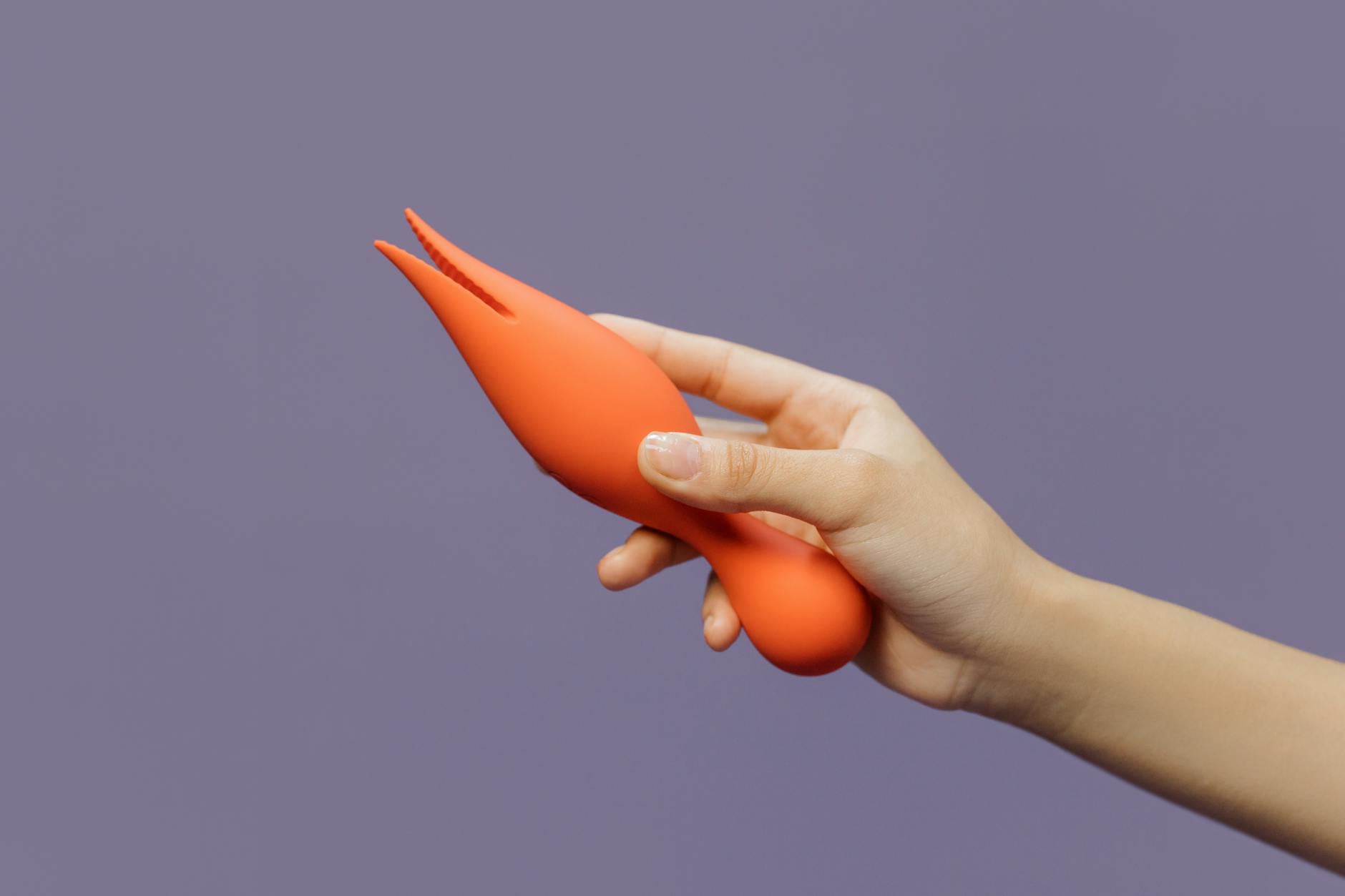
How to Use a Lemon Vibrator When You Want to Explore Solo Pleasure Without Guilt
Here's the thing nobody tells you: solo pleasure is foundational. Not selfish. Not a stopgap until you have a partner. Not a consolation prize. Foundation.
But guilt is real. It lives in the nervous system, not the brain. You can intellectually know that your pleasure matters, and still feel shame crawling up your spine when you lock the door. That contradiction is normal. And it's treatable.
If you're considering a lemon clitoral vibrator for solo exploration but you're hitting resistance inside yourself, this is the post. I'm going to walk you through the practical part: how to actually use one. But I'm also going to address the part that matters more: why guilt shows up, what it's trying to protect you from, and how to build a sustainable solo pleasure practice anyway.
Understanding the guilt that shows up
Guilt about solo pleasure rarely comes from nowhere. It usually comes from one of three places.
First: cultural messaging. You've probably been marinated since childhood in the idea that sexuality exists for partnership, for reproduction, for someone else's benefit. Your pleasure as a standalone thing. Was that even on the table? For many people, the answer is no. That's not a moral failing. That's just where you started.
Second: family or religious frameworks. If you grew up in a household where sexuality was shameful, private, or sinful, your nervous system learned early to treat your own pleasure as dangerous. The feeling doesn't vanish because you intellectually moved past it. It lives in your body.
Third: something happened. You experienced rejection, violation, betrayal, or loss that taught you your pleasure was unsafe or unwelcome. Now your own touch triggers that memory, even if you're alone and completely safe.
Whichever of these resonates (and it might be all three), the first step isn't buying a toy. It's noticing the guilt without judgment. Not trying to logic it away. Just observing it like you're a researcher studying your own nervous system.
Why a lemon vibrator can actually help
Clitoral suction devices like the Lemon work differently than traditional vibrators. They stimulate the clitoris through gentle air-pulse technology rather than direct friction. This matters for guilt in a counterintuitive way.
When you're carrying shame in your body, direct touch can feel aggressive or activating. It can make the nervous system more guarded. But the Lemon's gentler suction sensation feels less like an invasion and more like a conversation. Your body doesn't have to brace. That softness can be the permission your nervous system needs to actually relax.
Second: there's something about using a device rather than just your hand that creates psychological distance from the shame. You're not doing anything to yourself. A tool is doing it. For people whose guilt is wired into self-directed touch, that distinction can unlock something.
Third: lemon vibrators have clear, finite controls. You're not in this open-ended exploratory state where your mind can wander into judgment territory. You're using a specific tool with specific settings. That structure can feel safer.
Setting up your physical environment for solo practice
The environment matters more than you think. You're not just removing distractions. You're signaling to your nervous system that this time is protected and legitimate.
First, lock the door. This is non-negotiable. Not because anything wrong is happening. Because your nervous system needs to know you're safe from interruption. That safety is what lets arousal happen.
Second, set a timer. Twenty to thirty minutes. This sounds clinical, but it works. Without a timer, part of your mind stays vigilant, watching the clock, worried about getting caught or running out of time. A timer gives your brain permission to settle. You can actually relax.
Third, put your phone in another room. Not on silent. In a different room. You're training your nervous system that this time is protected from every distraction, including digital ones. This is radical in 2026.
Fourth, temperature and comfort. Warm bedroom, comfortable positioning. Your body won't relax into pleasure if it's cold or your hip is going numb. This is self-respect, not indulgence.
Fifth: lubricant. Even if you don't think you need it, use water-based lube anyway. It reduces friction, increases sensation, and makes the experience feel more intentional. Plus, it signals to your nervous system that you're taking this seriously. You're not just sneaking this in. You're preparing.
Using the lemon vibrator: the practical steps
Start on the lowest setting. Not because there's a rule, but because moving slowly gives your nervous system time to register that nothing bad is happening. You're safe. You're in control.
Take five minutes just to explore. No goal. No orgasm agenda. Just let the sensation move through the tissue. Notice where it feels good, where it feels numb, where it feels overwhelming. You're gathering data about your own body.
If guilt shows up, pause. Notice it. You don't have to push through it. The point isn't to achieve an orgasm despite feeling terrible. The point is to slowly, gradually retrain your nervous system that your pleasure is safe.
When you find a rhythm that works, stay with it. Resist the urge to change settings constantly. Rhythm is what builds arousal. Constant adjustment interrupts it.
If you orgasm, great. If you don't, that's also fine. You're not training for a performance. You're building a relationship with your own body.
After, rest. Don't immediately jump up and resume your day. Lie still for five minutes. Let your nervous system integrate the experience. Let your body know that pleasure is followed by safety and rest, not panic.
Working through the guilt that might persist
Guilt often doesn't disappear overnight. You might use the Lemon, have a good experience, and then afterward feel shame. That's not because you did something wrong. That's your nervous system having a lag time.
When that happens, write it down. Not to judge yourself. To observe it. "I felt shame after. It showed up around the chest and throat. It sounded like [voice in your head]. It reminded me of [childhood message or past experience]." The more specifically you can name it, the less power it holds.
Then: counter it. Not with toxic positivity. With radical banality. "I am an adult. I have a body. My body has desires. Those desires are mine. That is the entire story."
If guilt is intense or persistent, that's worth working through with a therapist. Not because there's something wrong with you. Because you deserve support in rewiring patterns that are old and deep.
Building a sustainable solo pleasure practice
The goal isn't to become someone who uses a lemon vibrator constantly. The goal is to build a practice where solo pleasure stops being a guilty secret and becomes a normal part of how you take care of yourself.
This means regularity. Not obsessive. Regular. Once or twice a week. Something you return to, like stretching or taking a bath.
It means permission. You're not waiting for a partner to not be around. You're not stealing this time. You're scheduling it and honoring that schedule like you would a work meeting.
It means staying curious. Maybe the Lemon works perfectly for you. Maybe you discover you prefer a different sensation or setting. Maybe your solo practice evolves over months and years. That's all fine. You're not loyal to a device. You're loyal to yourself.
Most importantly: it means separating solo pleasure from partnered pleasure. These are different things. Solo pleasure isn't practice for partnered sex. It's not preliminary. It's complete on its own. When you stop treating it like a lesser version of partnered sex, guilt loses its grip.
Frequently Asked Questions
Is solo pleasure with a lemon vibrator healthy if I'm in a relationship?
Completely. Your nervous system, your body, your pleasure. These belong to you, partnered or not. A clitoral vibrator isn't a replacement for partnered sex. It's a separate practice. Many people in deeply connected partnerships use toys solo and find it actually strengthens their relationship because they're more in their bodies, more self-aware, more grounded.
What if I feel ashamed even after reading this?
Shame doesn't disappear because you intellectually understand it's not rational. It lives in your nervous system. If guilt persists, especially if it's tied to trauma, working with a therapist (ideally one trained in somatic work or EMDR) can help. You're not broken. Your nervous system is protecting you with outdated information.
How long does it take to feel comfortable using a lemon vibrator alone?
It varies. Some people feel comfortable immediately. Others need weeks or months of repeated, low-pressure practice. There's no timeline. You're rewriting neural pathways. That takes time. That's okay.
Should I tell my partner I'm using a lemon vibrator for solo pleasure?
That's your choice. There's no universal answer. What matters is that you're making the choice from a place of personal agency, not secrecy or shame. If you decide to share, lead with clarity: "This is about me getting to know my own body better. It's not about anything you're missing."
What if using a vibrator makes me feel more disconnected from my body, not less?
That can happen if you're using it to dissociate rather than connect. If you're on the Lemon but emotionally checked out, you're not building the relationship you want with your body. That's a sign to slow down, maybe work with a therapist, or try a different approach like hands-on exploration or meditation before using a device.
Can using a lemon clitoral vibrator rewire my nervous system around guilt?
Partially. Repeated experiences of safe, pleasurable touch can absolutely help your nervous system update its threat assessment. But if the guilt is tied to deeper trauma or old religious messaging, you'll probably need other support too. The vibrator is a tool. So is therapy. Use both.
The deeper truth
Your pleasure is not something you need to earn, hide, or apologize for. It's foundational. A lemon vibrator is one way to practice reclaiming that foundation. But the real work is internal. It's deciding, over and over, that your body belongs to you. That your sensations matter. That solo pleasure is legitimate.
That's not a conclusion you reach once and move on from. It's a practice. Every time you use the Lemon and honor what your body is telling you, you're rewriting old messages. Every time you rest afterward instead of rushing away ashamed, you're teaching your nervous system that pleasure is safe.
If you're ready to explore but hitting resistance, start small. Lock the door. Set a timer. Use the Lemon on the lowest setting for five minutes. Just notice. The goal isn't an orgasm. It's permission. Once you have permission, everything else becomes possible.
If you want more guidance on specific situations, explore how to use a lemon vibrator when you feel anxious about pleasure or discover how solo pleasure reshapes after major life changes. You deserve support, not silence.